1. What Is the Best Bag to Avoid Pickpockets?
Urban theft defense relies on front-worn crossbody bags with controlled closures. When sourcing the best bag to avoid pickpockets, prioritize ergonomics over generic styles. Building with body-facing zippers completely shuts down sneaky hands while you’re on the move, proving that the best purse to avoid pickpockets doesn’t have to be a hassle to use every day.
That sort of clever, low-profile security layout stops opportunistic thieves dead in their tracks before they even realize what’s happening, making it hands down the best type of bag to avoid pickpockets when you’re wading through packed tourist traps. Rugged, high-density fabrics brush off slash-and-grab attempts like it’s nothing, buying you critical seconds if some amateur tries forcing their way inside. At the end of the day, true peace of mind isn’t just about hauling bulletproof gear—it’s about backing it all up with a healthy dose of street smarts.
-
Anterior Placement: Wearing bags in front maximizes visual oversight and deters unauthorized access.
-
Ergonomic Geometry: Structured silhouettes prevent bulkiness while maintaining high security.
-
Structural Reinforcement: High-density textiles increase mechanical breach resistance.

2. How Pickpockets Target Bags: Match the Bag to the Theft Method
Interlocking sliders and security hooks anchoring main compartments defend against silent zipper manipulation. A functional anti pickpocket bag neutralizes sliding pulls during metro transit, while professional manufacturing specifies directional opening angles that force thieves to abandon efforts. Shifting storage entry points toward the anterior torso creates necessary security barriers. Successful anti-theft gear prevents blade attacks using internal steel cable skeletons that distribute shear stress across load-bearing surfaces. Systematic architecture ensures your selected anti theft travel bag maintains physical integrity under intense loads.
-
Exposed Slider Vulnerability: Leaving zipper pulls wide open is practically an open invitation for thieves to slip into your bag without you ever feeling a thing.
-
Shear Stress Distribution: High-tech woven textiles spread sudden pulling force evenly across reinforced panels so the material holds strong.
-
Physical Integrity Assurance: Heavy-duty, high-tensile strap reinforcement keeps straps from getting sliced through when someone tries a desperate grab-and-run.
Built beyond ordinary anti-theft bags, Aimazing Cut Proof Bags use Level 5 UHMWPE fabric, steel reinforcement, and a 4-Layer Anti-Theft System for advanced urban security.

3. Are Crossbody Bags the Best Anti-Pickpocket Bags?
Anterior sling placement allows continuous monitoring of zipper pulls and external pockets, making it optimal for visual control. A pickpocket proof crossbody bag integrates cut-proof linings and hidden closure mechanisms beneath natural arm positioning. Rigorous physical testing verifies that bag walls withstand abrasion and tension, relying on slash-resistant textiles to prevent visual identification of entry methods. Professional standards maintain sophisticated aesthetics alongside core functionality, while rectangular footprints hugging ribs create effective security profiles.
-
Tactile Connection: Hand positioning directly over primary zippers discourages unmonitored physical tampering.
-
Multi-Layer Barriers: Cut-proof internal linings stop blade penetration during sudden physical contact.
-
Aesthetic-Security Balance: Integrated protective layers preserve natural draping without compromising accessibility.
4. Sling Bag vs Crossbody Bag: Which Is Safer in Crowded Places?
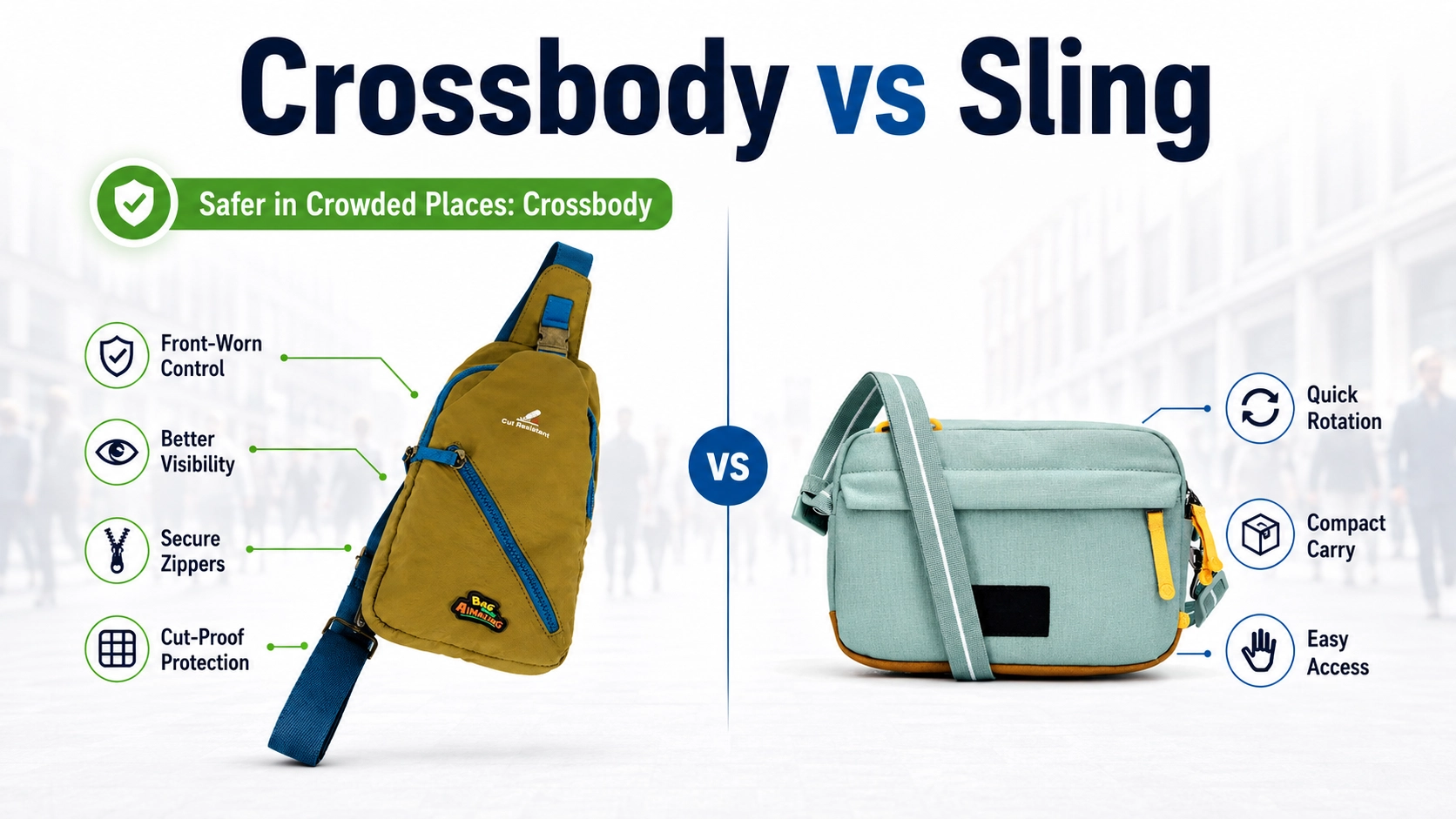
Crossbody bags are generally safer in crowded places because front-worn positioning, secure zippers, and better visibility reduce pickpocket risks. Triangular sling geometries rotate around torsos instantly from back to front, providing immediate transitions to monitored statuses. A specialized slash proof crossbody bag with rapid-rotation capabilities allows users to pull compartments into direct workspaces during transit bottlenecks. Vertical zipper placements prevent spilling during partial openings, ensuring primary security panels remain oriented toward wearer vision. Stabilizing secondary cross-straps anchor payloads against center chests, while intuitive single-hand locking hardware maintains accessibility during daily transactions.
-
Anatomical Rotation: Triangular geometries enable instant shifting from back transport to front monitoring.
-
Spill Prevention: Vertical zipper placements keep interior contents secure during partial openings.
-
Secondary Stabilization: Additional cross-straps anchor payloads firmly against the center chest.
5. Are Anti-Theft Backpacks Safe from Pickpockets?
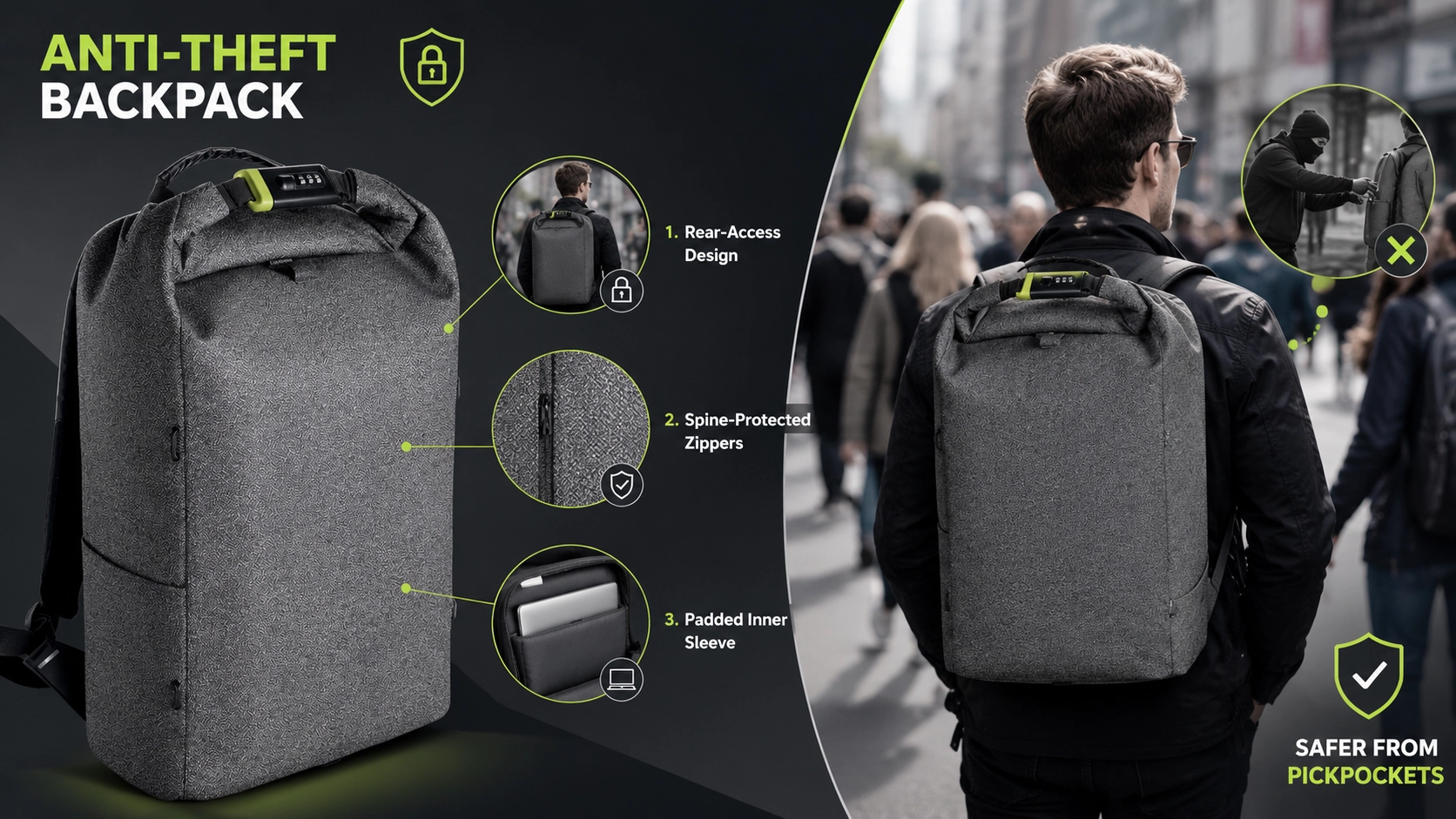
A high-performance anti theft backpack prioritizes rear-access geometry shifting entry points away from view, deterring pocket dipping. Standard packs invite zipper tampering behind you, whereas a sleek slash proof shoulder bag hides its entry points right against your body to keep thieves locked out.
That ergonomic, body-hugging layout delivers elite sling-level security without sacrificing an ounce of comfort, making it hands down the best type of bag to avoid pickpockets when you’re weaving through packed city streets. On top of that, built-in padded laptop sleeves add a rock-solid layer of defense against both sudden impacts and sneaky internal tampering, all while keeping the weight dialed in and evenly balanced across your back.
-
Rear Placement Vulnerability: Storage behind the wearer eliminates visual oversight during active transit.
-
Spine-Protected Tracks: Main zipper lines rest directly against the wearer’s back.
-
Inner-Layer Shielding: Electronic sleeves reside against the most protected internal frame boundary.
6. Shoulder Bags, Totes and Belt Bags: Which Designs Are Safer?
Diagonal cross-body straps resist opportunistic snatching better than vertical straps. A functional anti theft travel bag in tote or belt pack form integrates recessed zipper flaps protecting contents. Open-top totes remain vulnerable to casual reaching. High-density closures and anchor hardware convert fashion items into secure travel solutions. Recessed flaps prevent small item extraction. Belt bags position contents across stomachs for physical control, utilizing cut-resistant strap anchors.
-
Single-Strap Slippage: Vertical shoulder straps detach easily during pedestrian crowd congestion.
-
Cavernous Vulnerability: Open-top designs allow casual hand-reaching by passing thieves.
-
Anterior Stomach Control: Waist placement keeps valuables within direct visual and tactile reach.

7. Anti-Theft Features That Matter More Than the Bag Type
Lockable zippers with spring-loaded clips lock down your gear, making it the best bag to not get robbed when navigating sketch territory. Stashing your passport in a hidden back panel gives you foolproof security, easily earning its spot as the best type of bag to avoid pickpockets. Tough, slash-proof fabrics shrug off blade hits without looking bulky, while hidden steel cables or UHMWPE cores keep straps from getting clipped. Loop your bag to a chair leg with swivel clasps, and let RFID-blocking slots shut down digital pickpockets.
-
Lockable Hardware: Spring-loaded latches anchor zipper pull tabs securely against tampering.
-
Body-Facing Pockets: Concealed inner storage zones protect vital passports and currency.
-
Cut-Resistant Reinforcements: Steel cables and high-performance fibers prevent strap and panel severance.

8. How to Tell Whether a Slash-Resistant Bag Is Really Well Made
Validation requires evaluating industrial standards over marketing claims. True protection demands continuous full-panel lining from top bindings to base gussets. Advanced UHMWPE fabrics deliver superior strength-to-weight ratios. OEM specs require meticulous seam checks, bonded nylon threads, and multi-row box-X anchor reinforcement. EN388 laboratory test reports verify cut-resistance.
-
Full-Panel Armoring: Continuous lining coverage from top bindings to base gussets prevents vulnerable gaps.
-
UHMWPE Optimization: Advanced polymer fibers offer superior strength-to-weight flexibility over heavy steel mesh.
-
Accredited Laboratory Validation: Official test reports confirm actual tear strength and EN388 blade cut resistance.

9. Best Bag Type for Different Travel Situations
Tailoring geometry matches security to the environment: city sightseeing calls for compact crossbodys with front visibility; crowded metros need front-worn locking slings with slash-proof straps; laptop travel demands rear-access backpacks; festivals require anchored belt bags; business trips need trolley-sleeve packs; and cafés call for anchorable commuter totes, all functioning as the best type of bag to avoid pickpockets.
-
City Sightseeing: Compact crossbody formats maximize front-body visibility and quick access.
-
Crowded Metro Transit: Front-worn locking slings utilize dual-access zips and slash-proof straps.
-
Executive Laptop Travel: Structured backpacks provide rear-panel access and integrated luggage sleeves.
10. How Brands Should Specify an Anti-Pickpocket Bag for OEM Production
Dialing in specs starts by matching materials to specific threats. Blueprints need exact cut-liner boundaries, balancing weight with high cut ratings, while BOMs must detail locking zippers and cable cores. Always stress-test physical samples before mass production to engineer the best bag to avoid pickpockets.
-
Threat Profiling: Pinpoint exact environmental risks to guide protective material allocation.
-
Precision BOM Documentation: Specify exact locking mechanics, cable cores, and hardware ratings.
-
Pre-Production Validation: Rigorous sample evaluation ensures final goods meet all commercial and technical standards.
Frequently Asked Questions(FAQ)
-
What features make a bag truly anti-theft?
It locks down your gear by combining slash-proof built-in panels (like heavy-duty UHMWPE or steel wire mesh), lockable zipper sliders that keep sticky fingers out, steel-cable reinforced straps to stop slash-and-grab thieves dead in their tracks, and dedicated RFID-blocking card slots to block digital skimming entirely, giving you ironclad protection against both physical cut-throughs and sneaky unauthorized access.
-
Are anti-theft backpacks better than crossbody bags?
They really serve totally different purposes: anti-theft backpacks give you massive storage capacity and serious laptop protection with hidden rear-access entries, whereas crossbodies shine by keeping your gear right up front where you can easily keep eyes on it.
-
How do slash-resistant bags stop thieves from cutting them?
They rely on ultra-tough technical textiles or embedded micro-cables that instantly absorb and disperse the kinetic energy of a sharp blade, dragging out the cutting process so long and frustrating that opportunistic thieves just give up completely and walk away empty-handed.
-
What is the best anti-theft bag for crowded public transport?
For crowded metros, buses, and tourist areas, a front-worn crossbody or locking sling bag provides strong everyday protection because the main compartments remain within the wearer’s visual and physical control. Lockable zippers, body-facing pockets, and slash-resistant straps can further reduce opportunities for quick zipper opening or grab-and-run theft.
-
What is a body-facing zipper on an anti-theft bag?
A body-facing zipper is positioned against the wearer’s back, chest, or side rather than exposed on the outer surface of the bag. This placement makes the main compartment harder for another person to reach unnoticed and is especially useful on anti-theft backpacks and crossbody bags used in crowded environments.
-
How to secure an anti-theft bag to a chair or fixed object?
An anti-theft bag can be secured to a chair, table support, or other fixed structure using an integrated anchor strap, locking hook, or swivel clasp. Anchoring the bag limits grab-and-run opportunities when sitting in cafés, airports, restaurants, or other public spaces, although valuables should still remain within sight whenever possible.