1. The Scratchy Texture Crisis: Why Your Eco-Bags Are Losing Customers
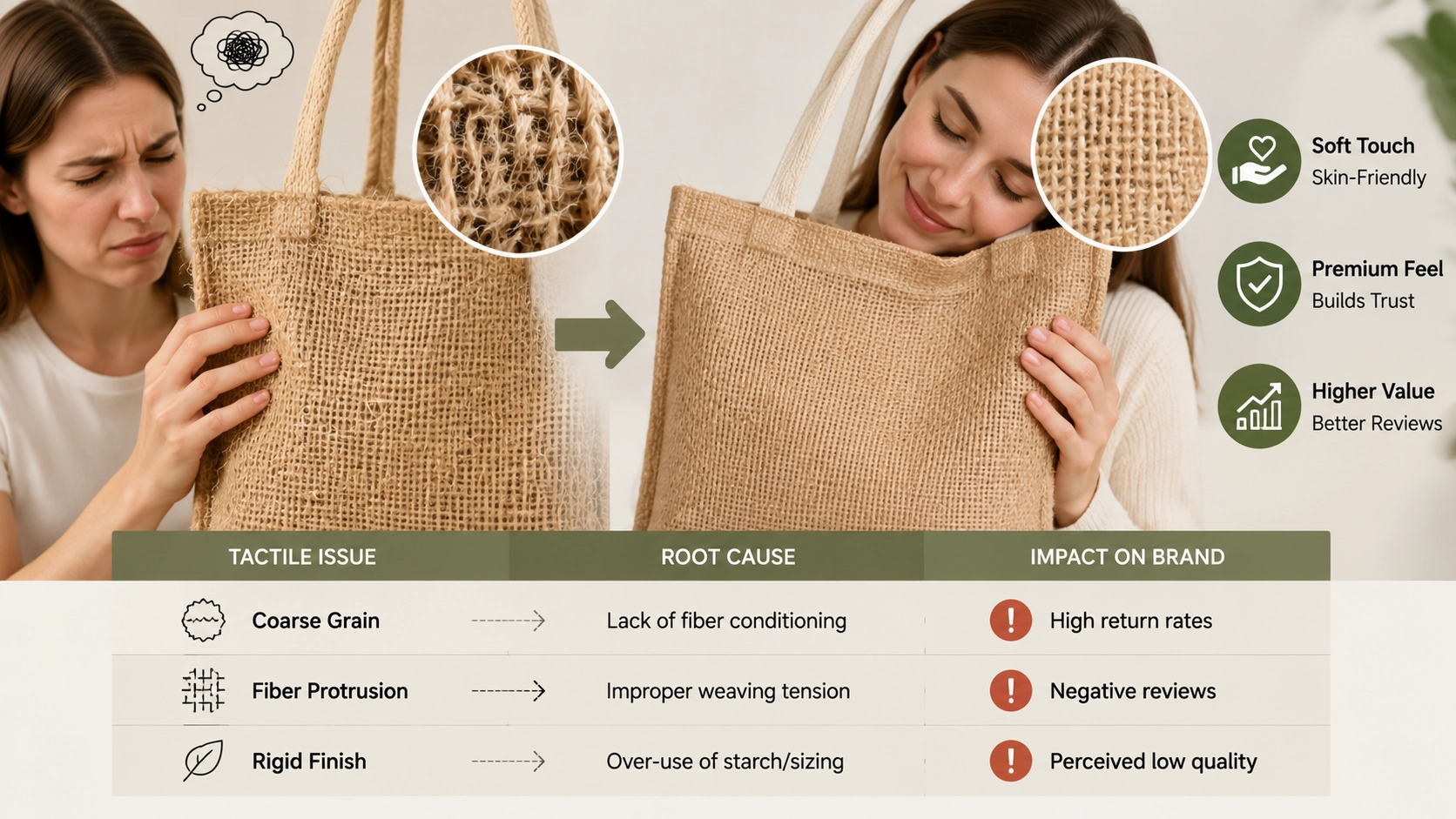
The “scratchy texture” crisis is a silent killer for sustainable brands. Customer satisfaction lives or dies by the sensory experience; if someone orders an eco-tote expecting a premium, natural feel but gets something that feels like sandpaper, your brand trust evaporates. This issue usually comes down to skipping tactile finishing during production. Many brands mistakenly think natural fibers are inherently rough, but that’s just not true—with the right processing, they can be soft and skin-friendly. If a customer finds your bag unpleasant to touch, they’ll blame your quality control, leading to a spike in returns and nasty reviews. Elevating the tactile feel of your inventory isn’t a “nice to have”—it’s a requirement if you want to play in the high-end retail space.
To get your material specs right, you first need to clear up the confusion regarding your raw materials:
- What is jute and what is jute made of? Jute is a high-tensile vegetable fiber harvested from the Corchorus plant.
- What is burlap and what is burlap made of? Burlap is the heavy-duty, plain-weave fabric constructed from those jute or kenaf fibers.
- What is burlap fabric used for? Traditionally used for shipping and agriculture, it is now a popular, durable choice for eco-conscious totes and lifestyle bags.
- Jute vs Burlap: Jute is the raw material; burlap is the finished textile.
- Burlap vs Hessian and Is burlap the same as hessian? Yes, they are identical; “burlap” is the standard term in North America, while “hessian” is the common term used across Europe and the UK.
- Burlap vs Jute: This usually refers to the distinction between the fiber (jute) and the specific, plain-weave construction (burlap/hessian).
Brand Strategy & Tactile Control
-
Sensory Disconnect: The gap between the premium vibe in your marketing and the rough reality of the product is why customers churn.
-
Tactile Quality Control: A soft-touch finish is just as critical to your bottom line as the bag’s structural strength.
-
Strategic Resolution: We apply professional softening treatments during manufacturing to kill the “itch factor” and boost your brand’s perceived value.
| Tactile Issue | Root Cause | Impact on Brand |
| Coarse Grain | Lack of fiber conditioning | High return rates |
| Fiber Protrusion | Improper weaving tension | Negative reviews |
| Rigid Finish | Over-use of starch/sizing | Perceived low quality |
2. Material Fundamentals: What is Jute and What is Jute Made Of?
Getting the fundamentals right is the difference between a high-end product and a budget reject. When sourcing, you’ll inevitably run into questions about material terminology.
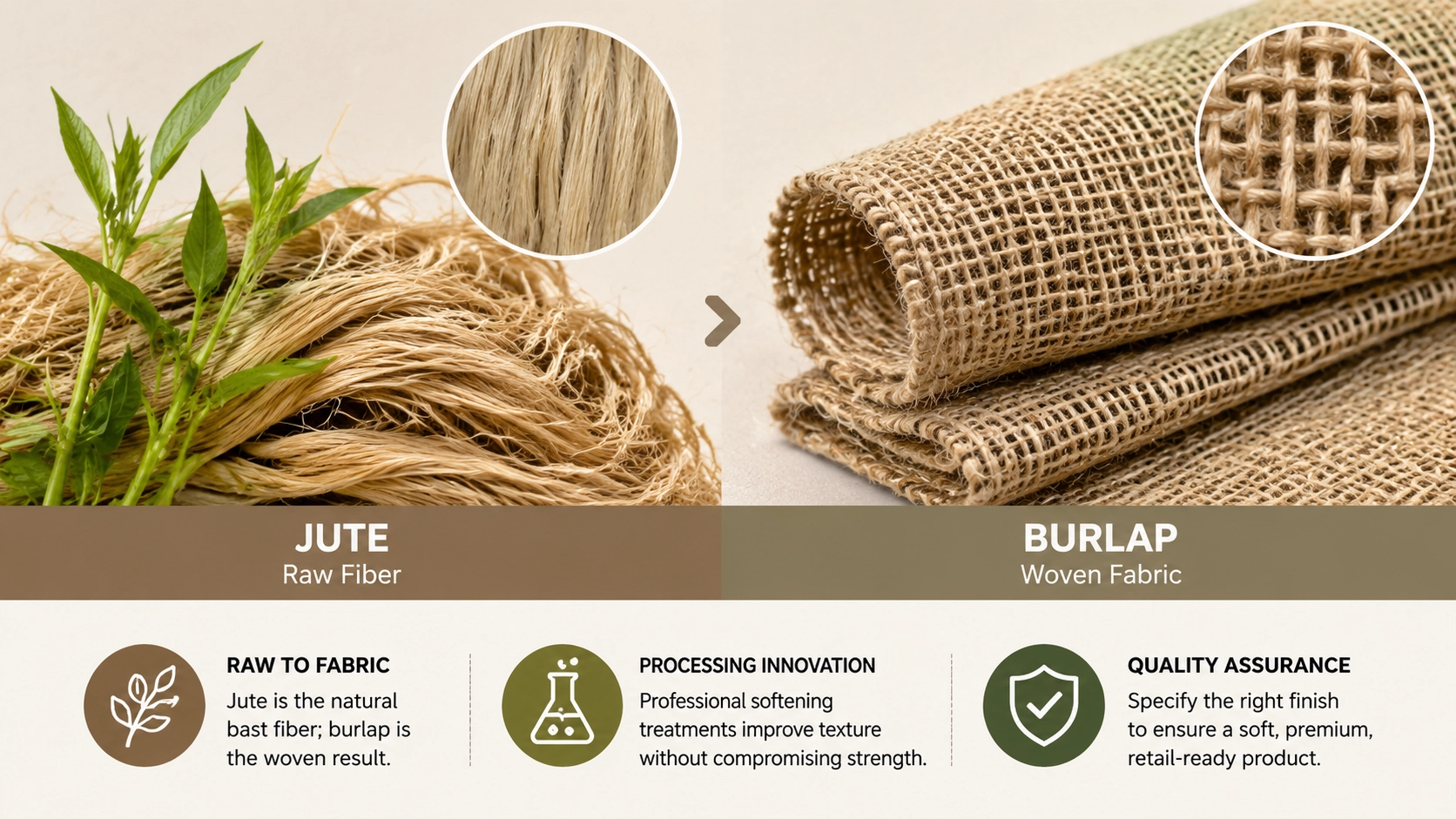
Are “is jute the same as burlap?” or “is burlap and jute the same?“—strictly speaking, no. Jute is a bast fiber from the Corchorus plant, while burlap is the woven fabric made from it. The jute vs burlap distinction is like comparing raw cotton to denim.
The burlap vs hessian (or hessian vs burlap) debate is simple: if you are asking “is hessian the same as burlap?” or “is burlap the same as hessian?”, the answer is yes. They are regional names for the same textile, with “burlap” preferred in North America and “hessian” standard in the UK and Europe. Mastering the burlap vs jute relationship and these regional naming conventions ensures precise procurement.
What is jute made of? Primarily cellulose and lignin, which provide strength but also natural rigidity. If factories skip fiber conditioning, bags feel scratchy and low-grade. For premium markets, professional softening is essential to transform raw fiber into a comfortable, retail-ready product.
-
Fiber Anatomy: Jute is a high-tensile bast fiber that’s both exceptionally strong and sustainable.
-
Cellulose Profile: We refine the fiber structure using precise softening agents to drastically improve the texture without losing any durability.
-
Tactile Potential: Proper processing is the secret to turning a generic, rough sack into a pliable, retail-ready textile that feels as good as it looks.

3. Understanding Burlap: What is Burlap and What is Burlap Made Of?
What is burlap? It is the finished, coarse, open-weave textile woven from jute, a high-tensile bast fiber. What is burlap fabric used for? Traditionally for heavy-duty storage, but when professionally softened, it becomes a durable, premium choice for sustainable totes.
Industry terminology often causes confusion:
-
Jute vs Burlap: Jute is the raw fiber; burlap is the resulting woven fabric.
-
Burlap vs Hessian: They are identical. Is burlap the same as hessian? Yes; “burlap” is North American, “hessian” is European.
To prevent a “scratchy” product, manufacturers must move beyond raw material specs. We apply specialized softening protocols to improve the fiber-to-weave ratio, transforming standard burlap into a soft, retail-ready textile that maintains its durability.
-
Weave Geometry: The plain-weave structure contributes to the signature roughness unless softened post-production.
-
Tactile Clarity: Linking raw material density to user comfort is the core of successful eco-bag design.
-
Soft-Touch Design: Strategic finishing treatments turn this rustic fabric into a comfortable material for daily use.
4. Sorting the Confusion: Jute vs Burlap vs Hessian Explained
Sourcing precision starts with terminology. Jute vs burlap distinguishes the raw fiber from the finished weave, while burlap vs hessian (or hessian vs burlap) are simply regional names for the same material. Clear communication is critical; confusion here often leads to inconsistent quality or the wrong tactile finish.
-
Fiber vs Textile: Always distinguish Jute as the raw ingredient and Burlap as the resulting woven fabric.
-
Regional Labels: Recognize that Hessian and Burlap are structurally identical, regardless of the geographic location of the supplier.
-
Procurement Precision: Standardizing your terminology eliminates the risk of receiving incorrect or poorly finished materials.
5. Answering the Critics: Is Burlap the Same as Hessian?
A frequent point of confusion in OEM sourcing is is burlap the same as hessian, and the short answer is yes. While they are industrially classified as the exact same fabric construction, the naming discrepancy still catches out plenty of inexperienced procurement agents. Furthermore, the question is hessian the same as burlap often arises because different regions prefer different labels, leading to unnecessary operational friction. Finally, addressing is burlap and jute the same is a critical step in training your design team, as conflating a raw fiber with a woven textile leads to severe quality standard failures. Maintaining this distinction is vital to the professional management of your supply chain.
-
Synonymous Industry Standards: Professional manufacturing facilities recognize these labels as interchangeable classifications.
-
Standardizing QC: Clear definitions allow quality control teams to apply uniform standards across all production runs.
-
Debunking Myths: Properly educating your team prevents quality issues stemming from basic linguistic misunderstandings.
6. The Definitive Comparison: Differences Between Jute and Burlap
To understand the differences between jute and burlap, look at the shift from fiber to fabric. If you’re asking, “Is jute the same as burlap?“, the technical answer is no: jute is the raw, high-tensile bast fiber, while burlap is the coarse, plain-weave fabric woven from it. Since raw jute is naturally rigid and burlap inherently scratchy, both require professional mechanical and chemical softening. Mastering these differences between jute and burlap ensures you specify the correct finishing protocols to achieve a premium, retail-ready feel in mass production.
-
Texture Metrics: Analyze the fiber diameter to determine the appropriate intensity of the softening treatment required.
-
Processing Innovation: Apply professional softening agents to modify the surface tension of the fibers effectively.
-
Quality Assurance: Specify the required finish in your production contracts to eliminate the scratchy texture factor.
7. The Aimazing Advantage: Engineering Soft-Touch Eco-Solutions
Aimazing Bag brings over 26 years of technical mastery in fabric conditioning and finishing to your brand’s supply chain. We specialize in transforming rigid natural fibers into soft, consumer-ready goods through proprietary softening treatments. Our engineering pedigree ensures that your products do not just look sustainable—they feel premium. By partnering with us, you remove the guesswork from your sourcing strategy and eliminate return-prone tactile failures. Let us help you conduct a tactile audit today to ensure your next bulk order sets a new standard for eco-friendly comfort and premium market appeal.