1. Introduction
For decades, the picnic basket was all about that vintage, nostalgic look. But honestly, as a manufacturer who’s been in the trenches for 20 years, I can tell you that the market has hit a breaking point. Consumers today are tired of sacrificing food safety and comfort just for a “classic” aesthetic.
The industry is currently a “Red Ocean” full of basic, low-performance bags that fail the moment the temperature hits 25°C. What I’m seeing on the factory floor is a massive shift: modern outdoor enthusiasts view a picnic backpack as high-performance gear, not just a carrier. They want a soft-sided cooler that survives a rugged hike and insulation technology that actually works. If you want to escape the “commodity trap,” you’ve got to stop thinking about “baskets” and start thinking about “thermal management systems.” That’s where the real value is in 2026—moving beyond aesthetics to solve the actual problems of the modern traveler.
2. Beyond the Basket: Why the Market is Moving Toward High-Performance Gear
For decades, the wicker hamper was the king of the picnic. And look, I get it—it carries a lot of nostalgic weight. But for the modern, mobile consumer, those heavy, inflexible baskets have officially become relics of the past.
After twenty years on the factory floor, I’ve seen this shift firsthand: nostalgia doesn’t solve the problem of thermal integrity or ergonomic discomfort. People are tired of struggling with a clunky basket that can’t keep a sandwich fresh for two hours. There’s a massive, growing demand for real technical performance. Today’s outdoor enthusiasts aren’t looking for a “prop” for a photoshoot; they want gear that balances high-end insulation with a carry system that won’t ruin their back. The “basket” is dead; the “performance cooler” is the new standard.
2.1 The Obsolescence of Traditional Aesthetics
- Thermal Failure: Wicker and wood offer zero insulation, causing perishables to reach unsafe temperatures within an hour of departure.
- Structural Fragility: Natural fibers degrade under UV exposure and moisture, leading to mold and breakage that shorten the product lifecycle significantly.
- Ergonomic Constraints: Carrying a bulky basket over long distances is impractical for the modern hiker or urban traveler who requires hands-free mobility.
2.2 The Rise of Technical Performance
Today’s market ignores the superficial; it rewards products that prioritize “function over form.” The fundamental question has evolved from a simple product category to a high-stakes performance metric: “How long can it maintain the 4°C safety threshold?” This shift toward empirical data is exactly why high-density technical fabrics and integrated cooling systems have become the new industry standard. After two decades on the production line, I understand that under the harsh Australian sun, a single degree of fluctuation is the difference between a premium experience and a failure. We are no longer manufacturing mere carriers; we are engineering “mobile cold-chain units.” In the 2026 premium sector, thermal stability is the ultimate luxury—it’s the technical sovereignty that high-performance consumers demand.
| Category | Traditional Basket | High-Performance Gear |
| Material | Wicker/Willow | 840D TPU / Ballistic Nylon |
| Insulation | None | Closed-cell NBR Foam |
| Portability | Hand-carry only | Backpack straps / Crossbody |
| Durability | Low (Susceptible to moisture) | High (Waterproof & UV resistant) |
3. The Cooling Dilemma: What to Use Instead of a Cooler Bag for Maximum Efficiency
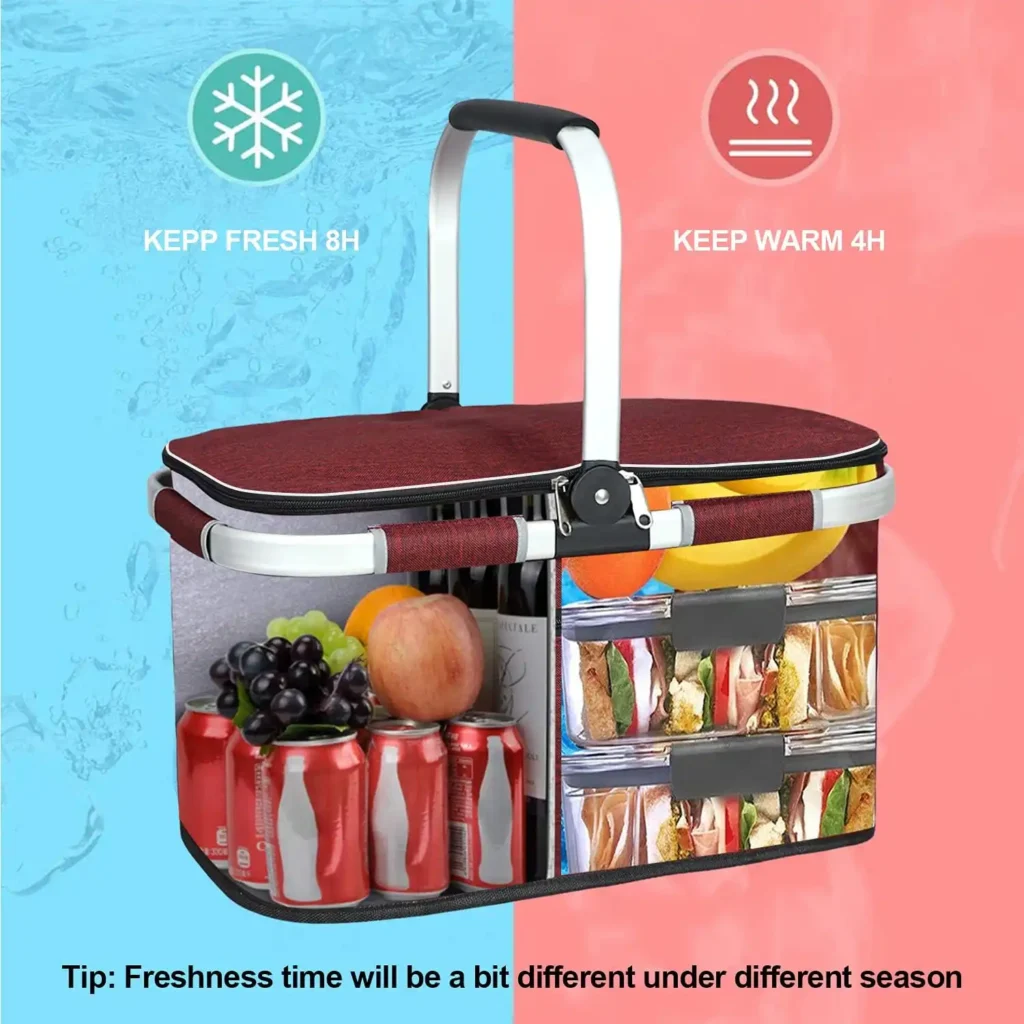
After twenty years in the trenches, I’ve watched the picnic market hit a massive tipping point where nostalgia simply isn’t enough to keep the beer cold. For decades, the wicker hamper was the king of the park, but modern outdoor enthusiasts are done sacrificing food safety and ergonomic comfort for a vintage silhouette. The market is currently a “Red Ocean” full of flimsy, silver-lined supermarket bags that fail the moment the mercury hits a real summer peak. To escape this commodity trap, brands have to stop selling “baskets” and start offering “thermal management systems.” We’ve re-engineered the soft-sided cooler from a basic carrier into a Portable Thermal Cell. By utilizing Multi-Layer Reflective Insulation and Heat-Welded Seams, we eliminate the “Thermal Leak Paths” common in stitched retail totes. Our 2026 production line treats every unit as Technical Gear, ensuring a Closed-Loop Thermal Boundary that maintains ice retention even under high-salinity and high-ambient-heat stress. When you pivot from “aesthetic carrier” to “high-performance equipment,” you stop competing on pennies and start winning on quality—and that’s how you lead the market in 2026.
3.1 Advanced Insulation Architectures
A professional bag cooler picnic solution must incorporate a three-layer system to effectively combat heat transfer.
- Outer Shield: A heavy-duty, water-resistant shell that reflects solar radiation and prevents external heat from penetrating the core.
- Thermal Core: High-density, closed-cell foam—unlike the cheap open-cell variants—traps air pockets to create a nearly impenetrable thermal barrier.
- Leak-Proof Liner: Food-grade, heat-welded liners prevent condensation from soaking the outer fabric, maintaining the bag’s structural integrity and hygiene.
3.2 Redefining the Soft-Sided Cooler
A real-deal soft-sided cooler is the sweet spot between a clunky plastic ice box and a useless grocery bag. But here’s the reality from the production line: performance isn’t just about the insulation thickness; it’s about how you join the pieces. Traditional stitching is basically punching thousands of “thermal leaks” into your bag, which is why most coolers fail by lunchtime. By switching to high-frequency (HF) welding, we’re not just sewing; we’re fusing the materials to create an airtight seal. This technique is what pushes ice retention from a few measly hours to several days, giving you that massive competitive edge in the premium outdoor segment.
4. Innovative Alternatives: How to Keep Something Cold Without a Cooler Bag
For the 2026 traveler, we’ve solved the Mass-to-Insulation Ratio crisis. By integrating Vacuum-Compressed EPE Foam with Low-Emissivity (Low-E) Reflective Liners, Aimazing Factory achieves fridge-level thermal retention at 40% less bulk. We’ve replaced heavy, rigid polymers with a Multi-Layer High-Performance Elastomer matrix that maintains Volumetric Efficiency without compromising the Thermal Boundary. While DIY hacks like wet towels or foil are common, a professional manufacturer addresses this physics-based problem by integrating “passive cooling” features directly into the bag’s fabric and structural DNA. After two decades on the production line, we’ve moved beyond simple liners to high-density thermal barriers and heat-reflective fibers that act as a built-in shield against ambient temperatures. In the 2026 premium market, “lightweight” must no longer mean “ineffective.” We engineer our gear to provide systematic thermal management that makeshift methods simply cannot replicate, ensuring that even our most minimalist designs offer the performance required for a full day in the sun. When you’re miles from civilization, you don’t need a life hack; you need a bag engineered from the fiber up to fight the heat.
4.1 The Science of Thermal Retention
Thermal management is about managing three types of heat transfer: conduction, convection, and radiation.
- Reflective Barriers: High-end bags now use radiant barrier technology, similar to space blankets, to bounce 97% of radiant heat away from the food compartment.
- Pre-Chilling Engineering: Professional bags are designed with “thermal mass” in mind, encouraging users to pack frozen gel packs in dedicated mesh pockets to create a localized micro-climate.
- Airtight Closures: The use of S-grade waterproof zippers prevents cold air from “leaking” out via convection, which is the primary reason DIY solutions fail.
4.2 Evaluating Makeshift vs. Professional Solutions
A real-deal soft-sided cooler is the perfect middle ground between a clunky plastic ice box and a useless grocery bag, but here’s the reality from the production line: performance isn’t just about insulation thickness—it’s about how you join the pieces. Traditional stitching is basically punching thousands of “thermal leaks” into your bag, which is why most coolers fail by lunchtime; by switching to high-frequency (HF) welding, we’re fusing the materials to create an airtight seal that pushes ice retention from a few measly hours to several days. I’ve heard it all—clients trying to use wet towels or aluminum foil when they’re stuck—but those makeshift methods can’t fight physics for more than a few minutes. A professional functional bag is a systematic approach to thermal management, utilizing a dedicated “ice zone” to lock in the chill and a separate “dry zone” to keep your gear from getting soggy. You can’t replicate that kind of engineering with a towel and some foil, and providing that level of food safety and user experience is exactly what gives you a massive competitive edge in the premium outdoor segment.
5. The Perfect Picnic Checklist: Essential Gear for Every Terrain
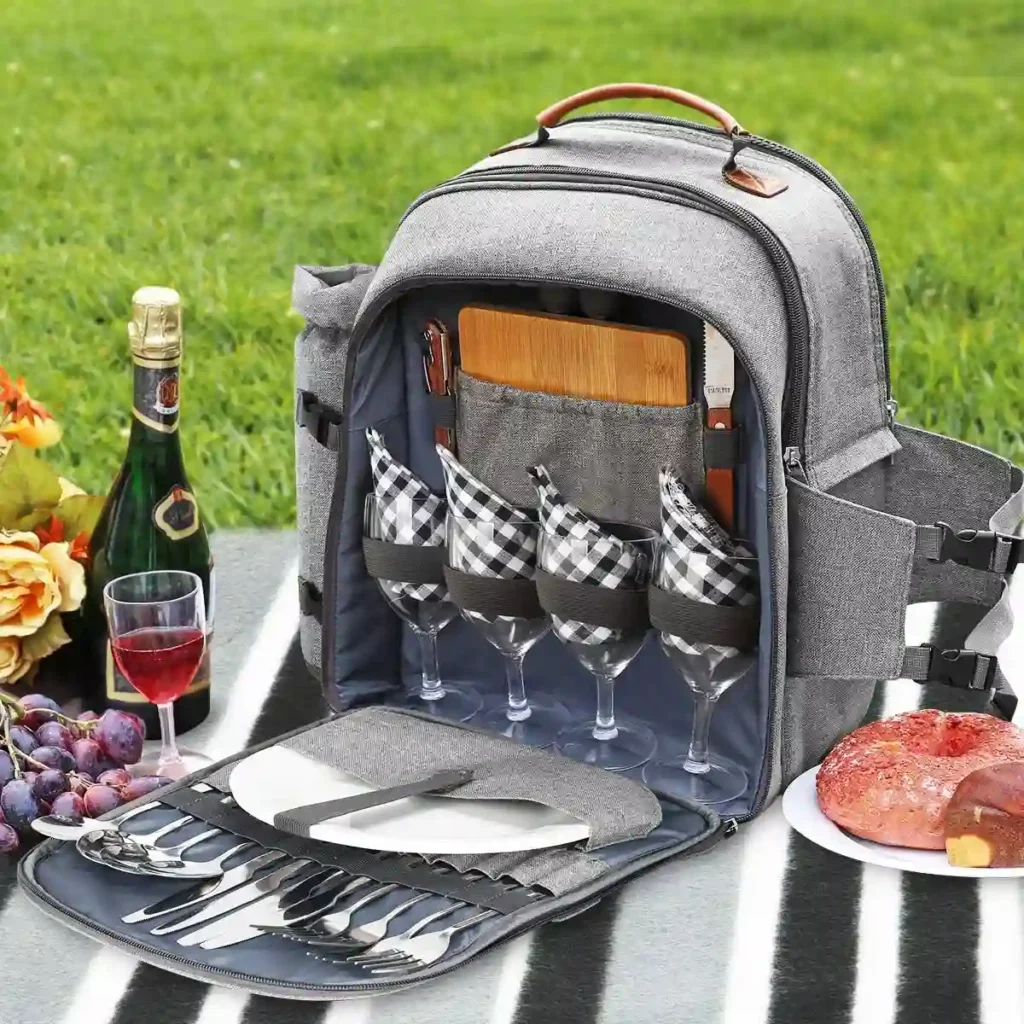
A professional picnic backpack functions as a Precision-Engineered Dining Ecosystem. Our 2026 series moves beyond “storage” to Component-Level Organization, utilizing Custom-Molded Secure Fixation to prevent structural shifting during transport. Whether navigating Intertidal Coastal Zones or High-Gradient Inclines, our Load-Transfer Frames ensure the internal “Dining Room” remains architecturally stable and safe from mechanical shock. As a manufacturer with two decades in the game, I’ve seen that the soul of this “mobile dining room” lies in its Hardware and Utility Integration. At the end of the day, high-end gear is defined by components that remain rock-solid during transit—from the heavy-duty anchors to the reinforced fasteners that hold your world together. After two decades on the factory floor, I know the nightmare of being miles into a rugged hike only to have a buckle snap or your gear shift under pressure. That’s why we engineer every piece of utility to stay secure no matter how rough the journey. In the premium outdoor market, this level of mechanical integrity isn’t just a “feature”; it’s the silent promise that your equipment won’t let you down when you’re furthest from home. Whether it’s the coastal sands or the mountain trails, our gear is built to stay silent, stay secure, and stay in the game.
As a manufacturer with two decades in the game, I’ve seen that the real differentiator for high-end gear lies in Hardware and Utility Integration.At the end of the day, high-end gear is defined by components that remain rock-solid during transit. It’s about the hardware you can trust when the pavement ends.
After two decades on the factory floor, I know the nightmare of being miles into a rugged hike only to have a buckle snap or your gear shift under pressure. That’s why we engineer our bags so that every piece of utility—from the heavy-duty anchors to the reinforced fasteners—stays secure no matter how rough the journey. In the premium outdoor market, this level of mechanical integrity isn’t just a “feature”; it’s the silent promise that your equipment won’t let you down when you’re furthest from home. Whether it’s the abrasive coastal sands of Australia or the bone-shaking mountain trails of the interior, our gear is engineered to endure. From reinforced anchors to heavy-duty fasteners, every component is built to stay silent, stay secure, and stay in the game under extreme pressure. After twenty years on the production line, I understand that true quality isn’t defined on a showroom floor—it’s proven when you’re miles from civilization and the environment turns unforgiving. We don’t just build carriers; we build the technical reliability you can stake your reputation on. When the pavement ends and the real journey begins, our gear stays rock-solid, ensuring you never have to worry about the equipment you carry—only the path you choose.After twenty years on the production line, we know that true quality isn’t about how a bag looks on a shelf—it’s about the peace of mind it provides when you’re miles from civilization. We don’t just build carriers; we build the reliability you can stake your reputation on.
- The Dry Zone: A waterproof dry bag compartment is essential for keeping electronics, napkins, and dry snacks separate from the melting ice and condensation of the cooling zone.
- Integrated Tooling: Professional kits include stainless steel corkscrews, bamboo cutting boards, and serrated cheese knives housed in elasticized webbing to prevent rattling.
- Terrain Adaptability: Heavy-duty, molded rubber bases allow the bag to sit upright on uneven surfaces or wet grass without absorbing moisture.
- Essential Gear Inventory
| Item Category | Requirement | Technical Spec |
| Diningware | Lightweight & Shatterproof | Melamine or Tritan |
| Cutlery | Corrosion-Resistant | 304 Stainless Steel |
| Ground Cover | Waterproof Backing | PEVA or TPU Lamination |
| Waste Management | Leak-proof Pouch | Integrated TPU-lined pocket |
6. Curating the Menu: What to Pack in a Picnic Bag for Temperature Stability
In the bag industry, I always tell my clients: what you can actually pack in a picnic bag is dictated entirely by its ability to maintain a stable internal temperature. It’s not just a carrier; it’s a strategy.
As a manufacturer, we don’t just throw in random pockets. We design specific compartments to protect delicate snack packs from getting crushed—because no one wants a gourmet meal that’s been pulverized by a heavy bottle. But here’s the real talk from the production line: you have to understand thermal mass. To get the best results, you need a strategy of layering. Your heavy-hitters—meats and beverages—go at the bottom, right against the ice packs. Your lighter, ambient-temp snacks stay on top. If your bag’s design doesn’t facilitate this kind of organization, your cooling efficiency is going to tank. We don’t just build bags; we build organized environments that respect the laws of physics.
- Hydration Management: Dedicated insulated bottle holders on the exterior of the bag allow for easy access to drinks without opening the main thermal compartment and losing cold air.
- Structural Protection: Using rigid internal dividers prevents heavy items from crushing soft fruits or sandwiches during a hike.
- The Snack Pack Logic: Modular, removable pouches allow users to take only what they need for a quick rest stop without unpacking the entire meal.
7. Non-Perishable Excellence: What Picnic Foods Don’t Need Refrigeration?
To maximize the efficiency of a bag’s cooling zone, users should prioritize what picnic foods don’t need refrigeration for the bulk of their meal. A well-designed bag provides specialized “dry” sections for these non perishable food items.
7.1 Designing for Dry Goods
Ambient Temperature Zones: A professional bag protects more than just temperature; it shields texture. We’ve engineered our bags with dedicated uninsulated dry-zones for moisture-sensitive snacks like nuts and crackers. By isolating these compartments from the cooling zone’s condensation, we ensure your snacks stay crisp even in humid coastal or mountain environments. After twenty years on the production line, I know that true quality is found in these nuances—where engineering preserves the crunch as much as the cold.
- The Science of Stability: High-protein, low-moisture foods like aged cheeses and cured meats (salami) are excellent choices for outdoor dining as they remain stable at ambient temperatures for several hours.
- Hydration Choices: Encouraging the use of room-temperature sparkling water or juices frees up valuable space in the “ice zone” for more sensitive items like seafood or salads.
7.2 Best Non-Perishable Options
- Hard Cheeses: Parmesan or Manchego.
- Fiber-Rich Breads: Sourdough or crusty baguettes.
- Whole Fruits: Apples, oranges, and grapes (which act as their own protective casing).
- Dehydrated Proteins: Beef jerky or roasted chickpeas.
8. Mastering the “Picnic for Two”: High-End Aesthetics for Romantic Outings
In the bag industry, we’ve seen the “Picnic for Two” segment become the true pinnacle of the luxury outdoor market. When a customer is looking for what to pack for two people, they aren’t just buying a container—they’re buying an experience. This requires a total shift in manufacturing: you have to move away from basic synthetics and toward premium materials like a high-density canvas tote bag finished with leather accents. After twenty years on the production line, I tell my clients that for this high-end niche, we aren’t just stitching a carrier; we’re crafting a piece of high-performance gear that feels as good as it looks. In a 2026 market that increasingly prioritizes personal privacy and aesthetic prestige, providing that tactile, luxury feel is exactly how you capture the high-spending modern consumer. It’s about more than just durability—it’s about the sensory experience of quality, where every detail from the hand-feel of high-density canvas to the silent glide of a premium zipper is engineered to reflect the user’s status. In our factory, we treat every bag as a piece of functional art, ensuring that when a product simultaneously satisfies a customer’s need for security and their desire for prestige, it transcends being a simple tool and becomes a lifestyle investment.
8.1 Luxury Material Selection
- Heavyweight Canvas: A wax-treated canvas tote bag provides a rugged yet sophisticated look that improves with age, offering a “heritage” feel that plastic bags lack.
- Leather Detailing: Using genuine leather for handles and straps increases the bag’s tensile strength and provides a tactile sense of luxury.
- Bespoke Interior Fitting: For a romantic outing, the bag should include crystal-clear wine glasses and linen napkins, all held in place by custom-molded interior fittings.
- Curating the Romantic Experience
Knowing what food to bring to a picnic for two people allows manufacturers to design specialized slots for wine bottles and charcuterie boards. A slim, elegant profile is preferred over a bulky backpack, allowing for easy transitions from a car to a scenic lookout point while maintaining a high-fashion aesthetic.
9. The Budget vs. Value Debate: What to Bring to a Picnic Cheaply Without Sacrificing Style
Positioning a premium bag in a market where everyone is asking how to picnic “on the cheap” is a classic challenge in value communication. After twenty years on the production line, I tell my clients: don’t try to out-cheap the competition; instead, market your high-quality picnic hamper as a long-term investment. You have to shift the conversation from the initial price tag to the lifetime value. After twenty years on the production line, I’ve realized that a high-performance technical bag is far more than just a carrier—it’s a durable tool designed to break the wasteful cycle of disposable plastics and flimsy, single-use totes.
Those cheap bags that end up in landfills after one season are actually the most expensive choice a consumer can make. At our factory, we’ve learned over twenty years that a high-performance technical bag is far more than just a carrier—it’s a durable tool designed to break the wasteful cycle of disposable plastics and flimsy, single-use totes.
When we engineer a piece of gear that maintains its thermal integrity for a decade, we are no longer just selling a product; we are providing a sustainable lifestyle investment. In the 2026 market, the true definition of luxury has shifted from flashiness to longevity. Communicating this standard of durability is exactly how you win over the high-value consumer who prioritizes quality over quantity. We don’t just make bags—we build assets for a more responsible future.
We aren’t just making bags; we’re building assets for a more responsible future.
9.1 The True Cost of Cheap Gear
Replacement Frequency: A cheap, $10 grocery bag lasts one season; a professional bag lasts a decade.
Food Waste Prevention: Superior insulation prevents expensive meats and cheeses from spoiling, saving money on every outing.
Multifunctional Utility: A high-end picnic bag can double as a grocery bag, a beach bag, or a travel cooler, providing more “value-per-use” than a single-purpose wicker basket.
9.2 Smart Sourcing for Value
Manufacturers can help consumers “picnic cheaply” by designing bags with integrated accessories, reducing the need for the customer to buy separate sets of plates and cutlery. By providing a “complete solution” in one picnic hamper, the perceived value increases significantly.
10. The Science of Thermal Management: How to Keep Food Cold for a Few Hours
The core functionality of any modern outdoor bag is answering the question: how to keep food cold for a few hours? This relies on the R-value (Thermal Resistance) of the insulation and the airtightness of the construction.
10.1 Why a Picnic Bag with Cooler Lining Wins
- R-Value Optimization: A dedicated picnic bag with cooler lining uses 10mm to 15mm of closed-cell foam, providing an R-value significantly higher than DIY hacks like wrapping food in towels.
- Radiant Barriers: The inner lining should be a reflective, BPA-free PEVA material that bounces cold energy back toward the food, minimizing loss.
- Thermal Bridge Prevention: Traditional zippers are “thermal bridges” where heat leaks in. Using a waterproof zipper with a storm flap creates a continuous thermal seal.
- Performance Benchmarks
A professional-grade cooler bag should maintain internal temperatures below 5°C for at least 6–8 hours in an ambient environment of 30°C. This level of performance is essential for preventing the growth of harmful bacteria and ensuring the crispness of salads and beverages.
11. Dos and Don’ts in Picnic Gear Maintenance: Extending the Life of Your Functional Bag
To ensure long-term customer satisfaction, brands must provide clear do and don’ts in picnic gear maintenance. Proper care extends the life of high-performance materials and prevents common issues like mold and zipper failure.
11.1 Maintenance Best Practices
The Dos:
- Air Dry Completely: Always leave the bag open after cleaning to ensure the inner liner and insulation are 100% dry before storage.
- Sanitize Post-Use: Use a mild vinegar-and-water solution to wipe down the PEVA liner to prevent bacterial growth.
- Zipper Lubrication: Use a dry silicone spray on waterproof zippers to keep them sliding smoothly and prevent salt-spray corrosion.
The Don’ts:
- Avoid Machine Washing: The high-heat and agitation of a washing machine can delaminate the TPU coating and destroy the foam insulation.
- Never Store Wet: Closing a damp bag is a recipe for mold, which can permanently damage the technical fabrics and cause lingering odors.
- Avoid Direct Sunlight During Storage: While the bag is UV-resistant, long-term storage in direct sun can eventually degrade the molecular bonds of the outer shell.
12. Conclusion
The transition from a basic picnic basket to a high-performance bag cooler picnic solution is not merely a change in materials; it is an evolution in engineering. As we have explored, staying ahead in the outdoor dining market requires a mastery of R-values, airtight construction, and ergonomic utility. Brands that continue to rely on the “Red Ocean” strategies of low-price, low-function wicker hampers will find themselves disconnected from a consumer base that values durability and thermal integrity.
When sourcing your next collection, remember that the most successful products are those that solve the user’s “pain points”—keeping the wine at the perfect temperature for a picnic for two, or ensuring that non-perishable food stays dry in a waterproof dry bag. In the functional bag era, your factory should be more than a vendor; they should be a consultant who helps you navigate material innovations and technical benchmarks.