1. The Great Capacity Illusion: How 20L and 25L are Actually Measured
In the global bag manufacturing industry, the stated volume of a pack is often a source of contention between brands and consumers. Many users find that a “20L” bag from one factory feels smaller than a “25L” from another because of inconsistent measurement methodologies. Professional sourcing requires moving beyond marketing claims to understand how usable volume is actually calculated.
1.1 ASTM Standards vs. “Creative” Marketing: How to Choose a Backpack
When deciding how to choose a backpack, you must verify if the manufacturer uses the ASTM F2153 standard, which involves filling the main compartment and all functional pockets with 20mm plastic spheres.
- The Sphere Method: This is the only objective way to measure volume as it accounts for the three-dimensional space inside irregular curves.
- Geometric Calculation: Some factories simply multiply height by width by depth (H * W * D), which artificially inflates the number by including “dead space” that the fabric cannot actually expand into.
- Pocket Inclusion: “Creative” marketing often adds the volume of side mesh pockets and external attachment points to the total liter count, misleading the end-user.
1.2 The 20% Rule for Backpacking: Why Usable Volume Matters
Understanding ‘what is the 20% rule for backpacking‘ is critical for preventing physical strain. This rule suggests that a loaded pack should never exceed 20% of the wearer’s total body weight.
- Volume-to-Weight Ratio: A 25L bag that is poorly organized encourages overpacking, making it easier to breach that 20% threshold.
- Structural Efficiency: A high-quality 20L bag with strategic internal dividers often provides better “usable volume” than a cavernous, single-compartment 25L bag.
- Compression Straps: Effective 25L designs incorporate side compression to reduce the “moment arm” of the load, keeping the weight closer to the spine even when the bag is not at full capacity.
2. Dimension Standards: Decoding Backpack Size in Inches and CM
The physical footprint of a bag determines its utility across different environments, from crowded schools to narrow airplane aisles. As a factory with 26 years of experience, we standardize these dimensions to ensure global compatibility.
2.1 What Size is a Standard Backpack? From School Corridors to Airplane Cabins
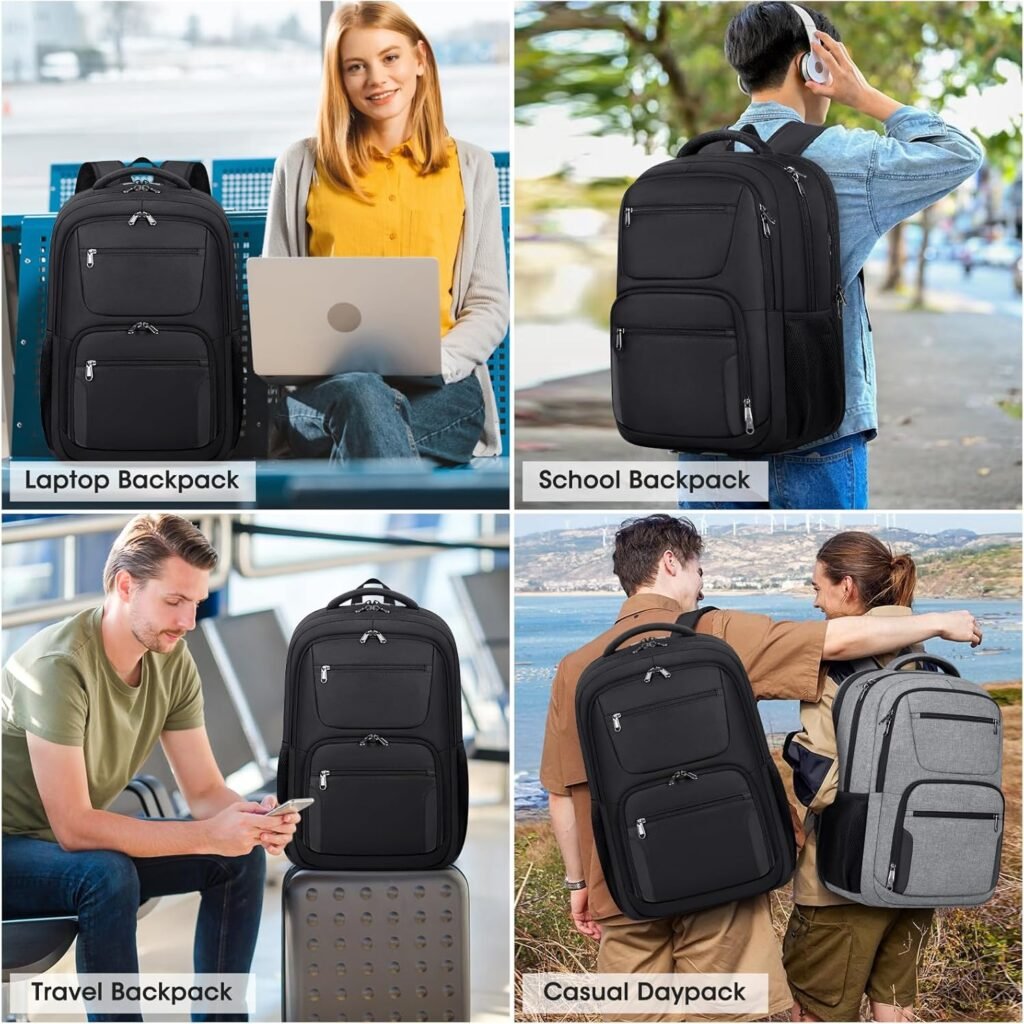
To answer what size is a standard backpack or what size is a normal size backpack, we generally look at the torso length of the average adult or student.
- Standard backpack dimensions: Most daily-use bags hover around 18*12* 6 inches.
- Average backpack size: Efficiency is defined by the 20L-24L sweet spot. For the high school commute, this range balances payload capacity with skeletal support. By integrating dedicated tech-compartments into this volume, we’ve engineered a high-precision blueprint that prevents over-packing while maintaining load-transfer integrity. Minimal bulk, maximal organization.
- Jansport backpack dimensions: 16.7 inches is the universal “Standard Silhouette”. While we respect this industry benchmark, our 2026 series enhances it with integrated tech-compartments and structural rigidity. We’ve taken the average backpack footprint and engineered a high-precision blueprint that prevents the “Slump-effect” typical of traditional canvas bags. Performance beyond the benchmark.
2.2 Global Metrics: Understanding Standard Size of Backpack in CM for Manufacturing
For international B2B sourcing, the standard size of backpack in cm is the primary language.
| Category | Dimensions (CM) | Dimensions (Inches) | Capacity | Target User |
| Compact | 40 * 28 * 13 | 15.7 * 11 * 5.1 | 16L – 18L | Minimalist Commuters |
| Normal Size | 45 * 30 * 15 | 17.7 * 11.8 * 5.9 | 20L – 22L | High Schoolers / Office |
| Expanded | 50 * 32 * 18 | 19.7 * 12.6 * 7.1 | 25L – 28L | Travelers / 17″ Laptop Users |
The average dimensions of a backpack in the “Standard” category provide the most versatile fit for 80% of the global population.
3. The Digital Nomad’s Dilemma: Finding the Best Laptop Backpack 2026
The best travel backpack for digital nomads 2026 must prioritize tech protection over raw volume. As laptops become thinner but wider, the internal “sleeve” engineering has become the most expensive part of the Bill of Materials.
3.1 Is a 15.6 Inch Backpack Big Enough for Modern Workstations?
When clients ask “Is a 15.6-inch backpack big enough”, they are auditing the internal laptop compartment dimensions, not the external shell. At Aimazing Bag, we’ve engineered a dedicated protective sleeve with zero-gap tolerance to ensure that high-profile workstations slide in seamlessly without stressing the zipper track. Precision-fit, by design.
- The “False Fit”: A 20L bag might have the height for a 15.6-inch screen but lack the corner radius to actually zip closed over a gaming laptop or a rugged workstation.
- Protective Clearances: A professional 15.6-inch sleeve should measure at least 38 * 26 cm to accommodate the bezel and a protective skin.
3.2 Sourcing the 17 Inch Laptop Backpack with USB Charging Port
For power users, a 17 inch laptop backpack with USB charging port is the mandatory standard.
- Integrated Connectivity: Modern 2026 designs utilize “Pass-Through” USB-C ports that support PD (Power Delivery) charging, allowing nomads to charge laptops directly from an internal power bank.
- Weight Counterbalance: To prevent the 17-inch hardware from pulling the bag backward, we engineer the laptop compartment to sit exactly against the back panel, utilizing the “Gravity-Center” alignment.
4. Airline Compliance: Does Your 25L Backpack Fit Under a Seat?
Airline regulations are the ultimate test for a 25L bag. If a bag is “over-stuffed,” its depth expands beyond the allowed limit, leading to forced gate-checking and extra fees.
4.1 Is a Standard Backpack Carry On Size Ryanair Approved?
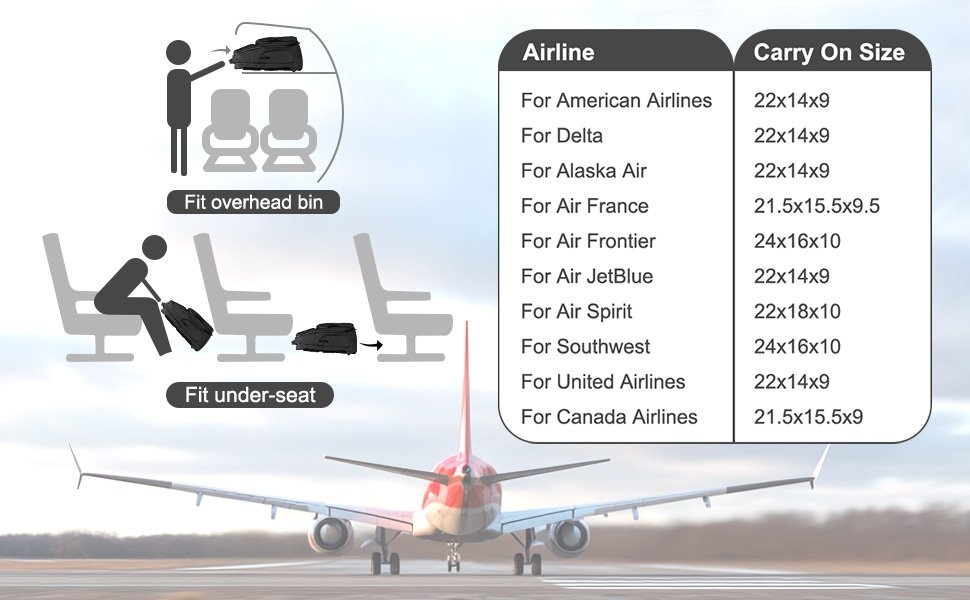
Navigating low-cost carriers requires precision. Is a standard backpack carry on size ryanair approved? Generally, yes, but only if it stays within 40 * 20 * 25 cm for the “free” personal item.
- The 25L Conflict: A 25L bag typically exceeds these dimensions when full. Therefore, a 20L bag is often the safer “guaranteed free” choice for European budget travel.
- Squish Factor: Engineering for the “Carry-On” threshold. Our soft-shell blueprint leverages tensile polyester fibers that allow for variable-volume compression. Unlike static hardshell hybrids, these designs can be mechanically manipulated to fit strict airline sizers without compromising the internal payload. Maximum utility, zero-gate rejection.
4.2 Navigating Frontier: Can I Bring a Backpack on Frontier for Free?
The answer to “Can I bring a backpack on Frontier for free” is dictated by its “Personal Item” classification. To avoid fees, the bag must adhere to strict dimensional constraints (18″ x 14″ x 8″). At Aimazing Bag, we’ve engineered a compliant blueprint that maximizes internal volume while ensuring the external footprint fits perfectly into the airline sizer. Zero-fee, by design.
Frontier Limits: Their limit is exactly the 18 x 14 x 8 inches backpack size.
- The 25L Under-Seat Test: Does a 25L backpack fit under a seat? Usually, it does, provided it is not packed to its maximum depth. Our 25L designs often include “tapered” tops to ensure they slide under airline seats without obstruction.
5. Educational Ergonomics: Best School Bags for High Schoolers
Choosing the best student gear requires a precision balance of internal volume and skeletal support. For those facing long commutes, we’ve engineered a load-distributing chassis that prevents postural collapse. At Aimazing Bag, we utilize high-density HDPE framesheets to provide the structural backbone necessary for high-capacity carry. Support, stabilized.
5.1 Ergonomic School Backpack for High School Students: 20L vs. 25L
Engineering the “Zero-Gravity” carry. Our high-precision blueprint focuses on load-lifting geometry to prevent spinal compression. By utilizing dual-density EVA padding and integrated aluminum stays, we’ve optimized lumbar support to survive the 80% market failure rate of standard school bags. Performance-first ergonomics.
- 20L Limit: Recommended for students who primarily carry a laptop and a few notebooks.
- 25L Requirement: Necessary for students with sports gear or heavy textbooks.
- Load Lifters: At 25L, “Load Lifter” straps on the shoulders become essential to pull the weight off the lumbar spine and toward the upper back.
5.2 Beyond the Knapsack: Why Durability is Non-Negotiable
While a simple knapsack might suffice for light casual use, high schoolers require industrial-grade construction.
- Reinforced Bases: We utilize 1680D ballistic nylon or molded EVA bases to survive being dropped on concrete playgrounds.
- Hardware Resilience: We only use #10 YKK zippers for main compartments to prevent the “bursting” effect common when students overstuff their bags during exam season.
6. Sourcing Specialized Gear: Tech-Ready and Security Features
The 2026 market has shifted from “bags that carry” to “bags that protect.” Security features are no longer premium add-ons but essential requirements for urban commuters.
6.1 The Anti-theft Security Backpack: Hidden Pockets and Biometric Locks
An Anti-theft Security Backpack utilizes a layered defense strategy.
- Hidden Pockets: We design a backpack with hidden pockets for passports and cash located in the lower lumbar padding, making them inaccessible while the bag is being worn.
- Cut-Proof Layers: High-end models incorporate a lightweight UHMWPE mesh between the fabric layers to prevent “slash-and-grab” thefts.
6.2 Designing a Smart Backpack with GPS Tracking
The smart backpack with GPS tracking and biometric lock represents the peak of 2026 luggage tech.
- Biometric Access: Replacing traditional padlocks with fingerprint scanners ensures that only the owner can access high-value electronics.
- Global Tracking: Integrating Apple Find My or Google Find My Device modules into the internal frame allows travelers to locate their bag across continents without subscription fees.
7. Material Engineering: Nylon vs. Polyester: Which is Better for a Backpack?
Nylon or Polyester? In 2026, the answer is in the specs. This choice defines the product’s mechanical lifespan and environmental footprint. We prioritize high-denier, abrasion-resistant textiles paired with GRS-certified eco-friendly yarns. It’s a high-precision blueprint to ensure your brand survives the 80% market failure rate. Engineering durability, by design.
7.1 Sustainable RPET Backpack: Eco-Friendly Solutions for 2026
The Sustainable RPET Backpack is now a requirement for global brands.
- Material Integrity: Modern GRS-certified RPET offers nearly identical tensile strength to virgin polyester.
- Carbon Savings: Utilizing RPET reduces energy consumption by 45% during the manufacturing process, allowing brands to meet their ESG targets.
7.2 Heavy Duty Waterproof Backpack for Motorcycling: Hardware Requirements
For a heavy duty waterproof backpack for motorcycling, polyester is often rejected in favor of high-tenacity Nylon 66.
- Abrasion Resistance: Nylon has a higher melting point and better “slide” resistance than polyester, which is crucial for rider safety.
- Waterproofing: These bags require TPU lamination and RF welded seams rather than traditional stitching to be 100% submersible.
8. The “Bagpack” Debate: Etymology and Global Branding
Terminology varies significantly by region, and using the wrong term can lead to “missing” your target market.
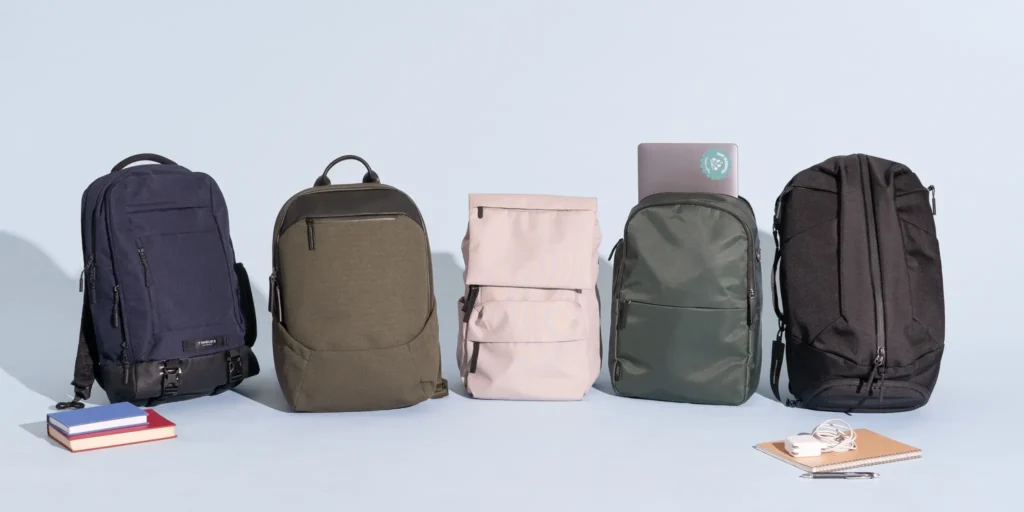
8.1 Is it Bagpack or Backpack? What Does the UK Call Backpacks?
When asking is it Bagpack or backpack?, the answer is geographic. “Backpack” is the globally dominant term.
- The British Perspective: If you wonder what does the UK call backpacks, you will often hear “Rucksack” or “Daysack.”
- The “Bagpack” Error: “Bagpack” is technically an incorrect compound word often used in non-native English regions.
8.2 What is the Meaning of Bag Pack in the Global Supply Chain?
Efficiency starts with technical clarity. We must differentiate the physical asset (Backpack) from the final fulfillment stage (Bag Packing). At Aimazing Bag, our standard operating procedures (SOP) ensure that the “Bag Pack” phase includes rigorous final-point inspection before shipping. Eliminating semantic error, ensuring output quality.
9. Health & Performance: How to Get Rid of Shoulder Pain from Backpacks
Ergonomic failure is the leading cause of product returns. Understanding the biomechanics of a backpack size is essential for designing a successful product.
9.1 Understanding Shoulder Bag Syndrome and Rotator Cuff Strain
Improperly fitted bags lead to Shoulder bag syndrome, a condition where nerves in the brachial plexus are compressed.
- Rotator Cuff Strain: Thin, unpadded straps dig into the soft tissue, causing long-term inflammation.
- The Solution: We implement “Dual-Density” foam—a soft layer for comfort and a firm layer to maintain the strap’s shape under heavy loads.
9.2 The Orthopedic Back-Support Bag: Engineering the Perfect Load Lift
An Orthopedic Back-Support Bag is defined by its “stay” system—internal aluminum or plastic rods that mimic the curve of the human spine.
- How to get rid of shoulder pain from backpack? The answer is weight transfer to the hips.
- The Hip Belt Fact: On a 25L bag, a functional hip belt can transfer up to 60% of the bag’s weight to the pelvic bone.
10. Daily Commute Optimization: The Minimalist Lightweight Pack
For the urban professional, a Minimalist Lightweight Pack is about “less is more.” These users prioritize a slim profile to navigate public transit.
10.1 Ultra Lightweight Backpack for Daily Commute: 16L vs. 20L
In the engineering of an ultra-lightweight commute, every gram of fabric weight is a technical constraint. At Aimazing Bag, we utilize high-tenacity, low-denier polymers that maximize the strength-to-weight ratio. We’ve optimized the molecular density to ensure your daily carry remains effortless yet indestructible. Minimal mass, maximal resilience.
- 16L Capacity: Ideal for “Tablet-only” commuters who carry nothing but a device and a wallet.
- 20L Capacity: The “Sweet Spot” for the office, providing enough room for a 14-inch laptop and a lunchbox.
10.2 Slim Professional Commuter Backpack for Office Aesthetics
Urban mobility requires a zero-bulk footprint. Our 2026 tech-series stays only 10cm deep when empty, eliminating the clunky visual signature of standard backpacks. By balancing expandable capacity with a fixed professional profile, we’ve created a high-precision blueprint for the high-density commute. Minimalist exterior, maximalist utility.
Conclusion: Stop Measuring Liters, Start Measuring Value
Backpack capacity is not just a number on a hangtag; it is a complex intersection of material science and ergonomic engineering. A “secretly inflated” 25L bag with poor structure will always feel smaller and heavier than a precision-engineered 20L pack.
Expert Insight: Before placing a bulk order, always verify a factory’s volume report using the sphere-fill method to ensure the size of standard backpack meets your requirements. Don’t let your brand be defined by inflated numbers—define it by superior performance.
Ready to customize a product that truly fits the Standard Size of School Backpack? Contact Aimazing Bag for technical support and 26 years of manufacturing expertise.