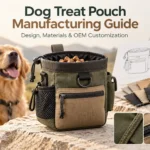
Professional trainers need a dog training bag that provides quick treat access, comfortable carrying, and practical organization during active training.
For pet brands, designing one is about more than adding features. Opening structure, compartments, materials, closures, and carry systems all need to match the target user while balancing usability, durability, and production cost.
This guide explores the key design considerations for developing a professional dog training bag, from structure and materials to prototype testing and OEM production.
1. What Professional Trainers Need From a Dog Training Bag
Professional dog trainers don’t need a training bag with dozens of features. They need a bag that stays out of the way while keeping treats and training tools within easy reach. This helps reinforce positive behaviors during high-speed obedience drills.
A well-engineered dog training bag should be validated for durability and performance under realistic training conditions, allowing handlers to extract treats instantly without looking down or breaking visual contact with the working dog. Slow access delays reward delivery and confuses the animal during crucial developmental phases.
For brands developing a dog training bag for professional users, that means paying attention to access, stability, cleanability, durability, and storage from the beginning of the design process.
-
Immediate Access: Streamlined opening perimeters ensure hands slip inside smoothly to retrieve bait without visual searching.
-
Environmental Resistance: Rugged soft-goods construction protects treats against mud, rain, and abrasive outdoor training fields.
-
OEM Customization: Specialized manufacturing facilities deliver reliable structural durability that generic retail workshops cannot replicate.
2. One-Hand Access and Opening Geometry
The dog training pouch requires an optimized aperture geometry that accommodates diverse hand sizes while preventing bait spillage during rapid movement. It’s important for sourcing engineers to keep in mind that opening dimensions should be tested against the intended hand size, treat volume, and usage scenario. Inadequate width causes hand scraping whereas excessive dimensions risk losing bait when bending over where precise volumetric engineering guarantees reliable tactile feedback for handlers during intense agility trials.
| Component Part | Technical Specification | Operational Purpose |
| Aperture Rim | Memory-alloy metal spring wire | Maintain permanent wide-open access geometry |
| Closure Strip | Embedded rare-earth neodymium magnet | Provide instant automatic one-handed sealing |
| Base Gusset | Wide-profile pleated soft fabric | Accommodate high-capacity treat inventories |

3. Treat Compartment, Liner, and Hygiene
A dog training bag needs to handle more than dry kibble. Professional trainers may use soft treats, oily meat, cheese, or other high-value rewards, so the interior should be designed with cleanability in mind from the beginning. For brands developing a custom training bag, the choice of liner, compartment layout, and seam construction can have a direct impact on how easy the product is to maintain after repeated use.
3.1Design for Different Treat Types
The main treat compartment should be large enough for the intended reward type while keeping food away from personal items and training accessories. A removable or wipe-clean liner can be especially useful when the bag is designed for moist or oily treats.
- Dry treats: A standard durable lining may be sufficient for kibble and dry snacks.
- Moist or oily treats: Water-resistant or wipe-clean lining helps reduce residue and makes cleaning easier.
- Mixed-use training: Separate compartments can keep treats away from phones, keys, clickers, and other accessories.
3.2 Keep Cleaning in Mind
Cleanability is often overlooked during the initial design stage. Details such as lining material, seam construction, and the shape of the treat compartment can make a noticeable difference after repeated training sessions. Smooth interior surfaces are generally easier to wipe down, while removable liners can make deeper cleaning more convenient.
For an OEM or ODM project, these choices should be matched to the intended use, target price, and expected cleaning routine rather than treated as one-size-fits-all requirements.
3.3 A Practical Interior Structure
A well-planned dog training pouch can combine a main treat compartment with separate storage for everyday training essentials. This helps trainers keep the items they use most often accessible without overcrowding the food compartment.
| Design Consideration | Possible Solution | Why It Matters |
|---|---|---|
| Dry treats | Durable easy-clean lining | Simple everyday maintenance |
| Moist or oily treats | Water-resistant lining | Helps reduce grease and moisture penetration |
| Personal items | Separate zippered pocket | Keeps phones and keys away from food |
| Training accessories | Exterior pocket or D-ring | Provides quick access without opening the treat compartment |
| Frequent cleaning | Removable or wipe-clean liner | Makes routine maintenance easier |
The right combination depends on the target user and product positioning. A lightweight everyday dog trainer waist bag may prioritize simplicity, while a professional trainer’s model may justify more specialized lining and compartment construction.
For pet brands, discussing these details with the manufacturer during the development stage can help balance cleanability, durability, user experience, and production cost before the design moves into sampling.

4. Closure Speed and Reward Security
Balancing rapid reward delivery with absolute spill prevention requires sophisticated mechanical closure engineering where sourcing teams evaluate various resistance profiles to ensure the pocket stays sealed during vigorous running or bending. Magnetic closures are useful when quick one-handed access is the priority, while zippers or drawcords may be more suitable when stronger containment is required.
-
Spill Resistance: Calibrated closure resistance prevents bait loss when handlers bend over or sprint.
-
Instant Release: Gentle downward pressure opens the container smoothly without catching fingers.
-
Secure Containment: Multi-tier sealing mechanisms protect valuable high-value rewards during dynamic movement.
5. Carry Systems and Bounce Control
Giving trainers multiple ways to clip or strap in means a professional dog training fanny pack fits right into whatever gear they are wearing, which is why sourcing directors spec out a full lineup of mounting hardware—think heavy-duty belt clips, adjustable waist straps, and modular MOLLE webbing. That kind of versatility lets handlers rock the pack however they want: around the waist, slung across the chest, or hooked straight onto a duty belt. Building in that kind of setup flexibility makes the product way more attractive on retail shelves, ensuring every single dog training fanny pack stays totally locked down and bounce-free no matter how you wear it.
| Carry System | Recommended Structure | Best For | Key Purchasing Considerations |
|---|---|---|---|
| Waist Carry | Adjustable webbing belt + quick-release buckle | Everyday trainers, obedience training, daily walks | Belt length, buckle strength, comfort, and stability during movement |
| Direct Clip-On | Heavy-duty metal belt clip | Agility training, quick on/off use, active handlers | Clip strength, attachment security, compatibility with different belts |
| Crossbody Carry | Adjustable shoulder strap + reinforced attachment points | Mobile trainers who need hands-free movement | Strap width, adjustability, load distribution, and bounce control |
| MOLLE Attachment | Heavy-duty nylon webbing + compatible clips | Professional K9 handlers and tactical gear setups | Webbing strength, modular compatibility, attachment security, and durability |
Purchasing Tip: The best carry system depends on the intended user and training environment. Brands developing a custom dog training bag should define the primary carry method early, then select the appropriate straps, clips, buckles, and reinforcement points around that use case.
6. Storage for Clickers, Toys, Phone, and Waste Bags
A practical dog training bag should keep frequently used items easy to reach while separating them from the main treat compartment. The goal is not to add more pockets, but to place each item where trainers can access it without interrupting the session. From our experience of manufacturing and feedbacks of customers, we think the following design details deserve great attention.
- Treats: Main compartment with wide, unobstructed access.
- Clickers: Exterior loop or D-ring for quick retrieval.
- Waste bags: Dedicated dispenser or quick-access opening.
- Phone & keys: Secure zippered pocket, separated from treats.
- Small toys: Exterior attachment point or secondary pocket.
| Item | Recommended Storage | Key Design Consideration |
|---|---|---|
| Treats | Main compartment | Fast one-handed access |
| Clicker | Loop / D-ring | Quick attachment |
| Waste bags | Dispenser pocket | Easy replacement |
| Phone & keys | Zippered pocket | Secure separation |
| Small toys | Loop / secondary pocket | Avoid crowding the treat area |
For an OEM/ODM project, we suggest storage should be planned around the target user, carry system, bag size, and training environment. The right structure can improve usability without adding unnecessary bulk, weight, or production cost.

7. Materials, Hardware, and Care Labels
Material selection should follow the intended use of the dog clicker pouch, rather than simply choosing the heaviest or most expensive fabric. Trainers need a bag that can handle repeated movement, outdoor exposure, and regular cleaning, while brands also need to balance durability, appearance, weight, and target cost.
- Lightweight fabrics: Suitable for compact everyday training bags where mobility is a priority.
- 600D–1680D fabrics: Offer different levels of durability for more demanding training environments.
- Coated or wipe-clean linings: Help make the treat compartment easier to maintain.
- Reinforced hardware: Clips, D-rings, buckles, and attachment points should match the expected load and frequency of use.
| Product Priority | Material Direction | Key Consideration |
|---|---|---|
| Lightweight | Lightweight nylon / polyester | Reduce bulk and weight |
| Everyday durability | 600D Oxford | Balance durability and cost |
| Heavy-duty use | 900D–1680D fabrics | Higher abrasion resistance |
| Easy cleaning | PU/TPU-coated lining | Simplify routine maintenance |
For OEM/ODM development, material, hardware, and lining choices should be evaluated together with the target price, usage environment, product appearance, and expected durability.

8. Prototype Testing With Professional Trainers
A prototype may look right on paper but still feel inconvenient in real use. Testing a dog training bag with professional trainers helps identify issues with treat access, closure, stability, and storage before the design moves into production.
- Access Test: Check how quickly trainers can retrieve treats with one hand.
- Movement Test: Evaluate bounce, shifting, and treat security during running and bending.
- User Feedback: Gather feedback on opening size, pocket layout, comfort, and overall usability.
For OEM/ODM projects, this feedback can be used to refine the structure and specifications before the PP sample and bulk production, helping reduce unnecessary revisions later.
9. OEM Specification Checklist for a Dog Training Bag Range
Before moving a dog treat training pouch into production, brands should confirm the key specifications with their manufacturing partner. A clear specification sheet helps reduce misunderstandings and keeps the approved design consistent through sampling and bulk production.
| Specification | What to Confirm |
|---|---|
| Dimensions & Capacity | Bag size, treat capacity, and compartment layout |
| Opening & Closure | Opening structure, closure type, and access method |
| Materials | Outer fabric, lining, and reinforcement materials |
| Carry System | Belt, clip, crossbody strap, or modular attachment |
| Hardware & Logo | Buckles, D-rings, zippers, and logo application |
| Packaging | Folding method, packaging, and carton requirements |
For OEM/ODM development, these details should be finalized before sampling so the manufacturer can accurately evaluate construction, usability, production cost, and bulk consistency.
10. From Dog Training Bag Concept to Production
A successful dog training bag starts with more than a good-looking design. For pet brands, the development process should connect user needs with practical construction and production requirements.
- Define the User — Identify the target trainer, training environment, and key use cases.
- Develop the Structure — Finalize dimensions, compartments, opening, carry system, and materials.
- Build the Prototype — Test the first sample for access, comfort, stability, and storage.
- Refine the Design — Use real-user feedback to adjust the structure before PP approval.
- Move to Production — Confirm specifications, quality requirements, packaging, and bulk production details.
Aimazing Development Timeline
At Aimazing, we connect product development with manufacturing from the early design stage:
3D Mockup → Sampling in 3–5 Days → PP Sample → Bulk Production
This development workflow helps brands move from an initial dog training bag concept to a production-ready product with fewer unnecessary revisions. As a pet bag development partner, Aimazing supports brands throughout the process—not simply at the manufacturing stage.
Frequently Asked Questions (FAQ)
What should be in a dog training bag?
A good dog training bag needs to check all the right boxes: a grease-proof, food-safe main pocket for smelly high-value bait, a slick little rubber grommet to pull poop bags through on the fly, an exterior D-ring to clip your clicker to, and a secure zippered stash spot for your keys and phone so they don’t bounce out while you are moving.
Is a waist pouch or crossbody bag better for training?
A waist pouch is often preferred for active training because it keeps the bag close to the body and allows quick one-handed access. However, the best carry system depends on the trainer’s movement and equipment. It stays completely put, meaning you can dive in for a reward with one hand in a split second without looking—crucial when you are running high-speed obedience or agility courses.
How big should a training treat compartment be?
A training treat compartment should feature a volumetric capacity measuring roughly 5 to 7 inches in width and depth to accommodate ample reward bait for extended sessions without adding cumbersome bulk or restricting active handler mobility.
Do trainers need separate clean and dirty pockets?
Trainers benefit greatly from separate clean and dirty pockets to prevent oily meat treats and food crumbs from contaminating personal electronics, keys, or clean training accessories stored within secondary compartments.
What closure is fastest for rewards?
A rigid-frame opening with magnetic closure can provide very fast one-handed access, especially when trainers need to retrieve treats repeatedly during active sessions.
How should a training bag attach to the body?
A solid training bag has to lock down tight with a dual-point setup—pairing a tough metal belt clip with an adjustable webbing strap—so it stops bouncing up and down or spinning around your waist when you are sprinting across a training field.