1. What Is an Insulin Cool Pouch?
An insulin cool pouch is a compact thermal container designed to maintain safe medication temperatures during daily transit without electrical power. According to FDA and ADA guidelines, unrefrigerated insulin degrades rapidly when exposed to temperatures exceeding 30°C (86°F). As an OEM bag manufacturer, we engineer these soft-shell accessories utilizing phase change materials or water-activated evaporation layers, offering you a reliable insulin cooler travel case solution.
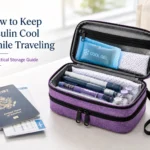
Soft builds use flexible fabrics and collapsible pockets, while water-activated pouches rely on evaporative cooling from a quick water soak. Gel-pack versions use non-toxic inserts to soak up heat, holding everything from single pens to dual setups with needle kits for daily commutes or clinic visits. Sourcing a solid insulin pouch cooler means nailing the stitch density and heat-welding waterproof linings to completely block out external moisture.
| Feature / Metric | Soft Water-Activated Pouch | Gel-Pack Soft Pouch |
| Primary Cooling Principle | Evaporative cooling via water immersion | Pre-chilled gel inserts or PCM packs |
| Activation Requirement | Submerge in cold water for 5 to 10 minutes | Store in refrigerator or freezer prior to use |
| Typical Weight Profile | Extremely lightweight under 100 grams | Moderate weight due to internal gel packs |
| Flexibility and Foldability | Highly collapsible when dry | Semi-rigid due to insert compartments |

2. What Is an Insulin Cooler Travel Case?
An insulin cool pouch variant or travel case is a rigid protective enclosure engineered to shield fragile diabetes management supplies against severe mechanical impacts. Medical authorities like the NHS emphasize that structural crushing forces damage delicate delivery mechanisms inside injection pens. Our facility produces robust travel kits using heavy-duty external shells and high-density interior padding.
When you look at the different builds out there, EVA hard-shell cases use compression-molded outer walls that easily shake off heavy crushing forces. On the flip side, soft insulated cases usually lean on thick EPE foam layers sandwiched right between rugged nylon exteriors and reflective foil barriers. If you are checking out vacuum bottle formats, they go with double-wall stainless steel insulation to keep things stable over long stretches, while electric coolers pack in thermoelectric cooling chips that plug right into a USB cable. Whenever B2B buyers are stocking up on a reliable cool pouch for insulin, they usually opt for structured travel cases when users need serious organization for multiple pens and glucose meters while hopping across international borders.
-
EVA Hard-Shell Case: Compression-molded outer walls resist heavy crushing forces inside luggage and backpacks.
-
Soft Insulated Case: Thick closed-cell foam layers provide balanced thermal protection and flexibility.
-
Vacuum Bottle Format: Double-wall stainless steel construction maintains stable internal temperatures over long journeys.

3. Cooling Pouch vs Travel Case Comparison
Comparing cooling pouches against travel cases reveals distinct functional trade-offs regarding weight, structural protection, and interior organization capacity for bulk retail buyers. According to ADA protocols, selecting transport formats depends strictly on user activity levels and environmental exposure risks. Our engineering team has compiled a detailed cool pouch for insulin comparative matrix to guide wholesale purchasers in optimizing product catalog offerings for diverse consumer demographics.
| Indicator | Cooling Pouch | Hard-Shell Case |
| Cooling method | Water, PCM or gel | Gel, PCM or active cooling |
| Protection | Limited impact protection | Higher crush resistance |
| Weight | Lower | Higher |
| Capacity | Usually smaller | More configurable |
| Branding area | Moderate | Larger |
| Cost | Lower | Medium to high |
| Best use | Daily carry | Travel and organized kits |

4. Which Option Is Better for Insulin Pens?
Selecting optimal transport formats for insulin pens depends on device totals and integrated needle storage requirements. Clinical recommendations indicate that maintaining structural integrity prevents accidental dosage activation inside packed bags. For single-pen workdays, an insulin cooling pouch offers unmatched pocket-friendliness and discretion. When multiple pens require simultaneous transport, structured travel cases provide superior organization. Carrying pens plus needles demands dedicated internal elastic loops to prevent punctures. Advanced travel cases feature integrated digital temperature displays utilizing small LCD screens connected to internal sensors. Sourcing these advanced configurations requires specialized electrical component integration executed by our OEM production lines.
-
Single Pen Carry: Compact soft pouches provide maximum discretion and lightweight pocket portability.
-
Multiple Pens and Needles: Structured travel cases secure numerous devices with dedicated elastic restraining loops.
-
Temperature Monitoring: Advanced units incorporate external LCD displays for real-time internal thermal tracking.

5. Which Option Is Better for Vials and Syringes?
Glass insulin vials need heavy-duty physical defense and smart interior layouts to dodge brutal transit cracks, because any smashed glass means you have to toss the medication instantly per FDA safety rules. We solve this by using rigid EVA molded shells that absorb massive impacts and keep individual bottles totally isolated so they never smash into each other during rough baggage handling.
Inside, stretchy mesh pockets lock down loose syringe barrels and tight elastic loops keep alcohol swabs firmly in place. Dealing with moisture is a huge deal since melting ice packs cause destructive condensation, which is why manufacturing a dependable cooling pouch for insulin requires 100% waterproof TPU linings to trap all stray wetness away from your gear. Whether you are packing vials in an insulin cooling pen wallet or heading out for the day, solid structural engineering keeps your medication safe and completely dry.
-
Fragile Vial Protection: Molded EVA compartments absorb impact shock to prevent glass breakage.
-
Internal Dividers: Custom partitions keep multiple glass bottles separated during transit.
-
Moisture Control: Sealed TPU/PEVA linings prevent condensation from damaging paper product packaging.

6. Cooling Performance and Environmental Conditions
Environmental factors like ambient temperature, humidity, and solar radiation severely impact operational thermal duration. Official NHS and ADA advisories warn that extreme heat accelerates insulin degradation, rendering hormones ineffective. Dry versus humid climates alter evaporation rates of water-activated pouches, with arid environments accelerating cooling while humid conditions slow it down. Freezer access determines whether gel-packs are properly recharged between travel legs. Water access is critical for an insulin cool pouch design requiring hydration. Trip duration dictates whether passive pouches suffice or active cooling cases become necessary. Ambient temperature extremes require buyers to review empirical laboratory test reports. Reactivation requirements must be clearly communicated in product instruction manuals.
-
Climate Variability: Arid and humid environments directly alter evaporative cooling rates.
-
Recharge Access: Reliable access to cold water or freezers dictates thermal sustainability.
-
Trip Duration: Extended travel schedules necessitate high-capacity phase change cooling inserts.
7. Materials and Construction
Using top-shelf raw materials and tight manufacturing keeps gear tough and thermally efficient. Industrial specs call for rugged, water-repellent nylon or polyester outer shells to fight off rain, paired with EVA molded panels for solid impact protection. Thick EPE foam blocks heat transfer, while waterproof TPU or PEVA linings make cleanups easy. Mesh pockets and elastic loops lock medical gear in place, and zippers get heavy tensile testing to survive daily abuse—all crucial when building reliable cooling bags for insulin that can effectively keep insulin cool while traveling.
-
Exterior Shells: Durable 600D polyester or nylon fabrics provide superior abrasion resistance.
-
Thermal Insulation: High-density EPE foam layers restrict unwanted environmental heat transfer.
-
Internal Linings: Waterproof PEVA and TPU materials simplify cleaning and contain moisture.

8. B2B Sourcing Considerations
Building a profitable insulin cooling pouch line requires strategic planning across consumer profiles, target pricing, and technical specs. Buyers analyze if target markets need daily carry or rugged travel durability, while pricing dictates allowable manufacturing costs. Core requirements include aligning cooling duration with climates, sizing for multi-dose regimens, and using molded EVA shells for brand silhouettes. High-frequency debossing and rubber patches boost visibility, while private-label packaging lifts shelf appeal. Clear manuals meet safety standards, and strict MOQ and sample testing protocols ensure quality.
-
Consumer Profiling: Align product form factors with target user lifestyle requirements.
-
Cost Structuring: Balance retail price targets against material specifications and manufacturing overhead.
-
Customization Scope: Utilize bespoke EVA molds and branding techniques for market differentiation.
- TSA Rules: Consider a TSA-approved insulin travel cooler if your target users are frequent flyers.
9. How to Evaluate an Insulin Cooler Bag Supplier
Partnering with an experienced OEM bag manufacturer eliminates supply chain risks and guarantees consistent product quality across large-scale bulk orders. Professional procurement teams execute rigorous evaluation protocols to verify supplier capabilities before signing contracts. Ask for actual test conditions and empirical laboratory data rather than relying on generalized marketing claims. Review material specifications to ensure raw fabrics meet international standards. Verify cooling-pack composition to guarantee non-toxic, medically compliant phase change materials. Request an insulin cool pouch pre-production sample to evaluate craftsmanship firsthand. Conduct independent temperature logging tests inside controlled chambers. Inspect stitching density, zipper quality, and compartment dimensions for strict tech pack adherence. Confirm labeling and packaging comply with destination market regulations.
-
Empirical Testing Data: Demand laboratory-verified thermal decay test reports under controlled conditions.
-
Physical Sample Audits: Evaluate pre-production prototypes for stitch precision and hardware durability.
-
Specification Compliance: Verify raw material certifications and manufacturing tolerance standards.
10. FAQs
Do insulin cooling pouches need ice?
Water-activated cooling pouches skip the ice entirely since they run on basic evaporation once you give them a quick soak in cold water. Gel-pack versions, on the other hand, need to hang out in the fridge or freezer beforehand to chill down. Meanwhile, active electronic coolers ditch ice completely by plugging straight into a USB port for juice.
Are cooling pouches reusable?
Most cooling pouches are built to last through hundreds of uses. Water-activated styles bounce right back to life with a quick soak, and you can toss gel packs back in the freezer as many times as you want without losing any chill power.
Which format is easier to customize?
Soft cooling pouches offer greater ease of customization regarding exterior fabrics and printed graphics. Hard-shell EVA cases require custom metal compression molds, which involve higher initial tooling investments but deliver distinct proprietary shapes.
Is EVA better than a soft insulated bag?
EVA hard-shell cases provide superior crush resistance and impact protection for fragile glass vials. Soft insulated bags offer lighter weight, lower production costs, and greater flexibility for pocket carry. Selection depends entirely on the intended end-user application.