1. What Is An Airline Approved Cat Carrier
Sourcing an airline approved cat carrier requires understanding that universal compliance is a manufacturing myth. When buyers ask what cat carriers are airline approved, the answer depends on each airline’s cabin size requirements, under-seat dimensions, and structural expectations.
Commercial airlines maintain fragmented dimension restrictions, so OEM manufacturers design soft cat carrier bags with compressible perimeter walls to navigate these standards. Factory engineers build airline approved cat carrier models with reinforced yet flexible structures that can absorb minor seat-bar compression. Sourcing developers evaluate cabin clearance heights rather than relying on retail labels, ensuring the final design meets practical travel requirements. Standardized compliance requires adherence to baseline regulatory dimensions established by aviation authorities.
-
Aircraft Seat Geometry: Regional turboprops require compressible soft-sided framing solutions.
-
Global Policy Variance: International carriers demand collapsible perimeter wall designs.
-
Universal Adaptability: Engineered flexibility bridges conflicting airline size limits.

2. Engineering a Reliable Cat Carrier for Plane Travel
Designing an optimal cat carrier for plane cabins balances maximum interior room with strict under-seat clearance limits. Soft-goods teams translate aviation requirements into structural blueprints. Manufacturing requires millimeter-accurate pattern drafting. Sourcing managers establish floor footprints maximizing pet resting space while respecting height ceilings. Engineering protocols integrate collapsible composite ribs yielding under pressure. Technical documentation ensures exact geometric tolerances during high-volume production. Aircraft seat bars press downward during turbulent flights. Preventing collapse requires memory-resin framing rods absorbing weight loads. A designed airline approved cat carrier yields safely under seat bars without crushing the animal.
-
Millimeter-Accurate Drafting: Blueprints translate airline size rules into manufacturing dimensions.
-
Resilient Composite Ribs: Internal spring rods absorb downward seat pressure.
-
Vertical Load Simulation: Factory compression testing guarantees structural survival.

3. Sourcing a High-Performance Cat Carrier for Airplane Operations
Optimizing footprint geometry for aviation standards ensures a commercial cat carrier for airplane satisfies retail buyers. Soft-walled engineering addresses dimensional variances through adaptive flexibility. Sourcing managers specify tapered sidewalls and flexible top panels conforming to floor contours. Factory laser-cutting arrays ensure every fabric panel matches specified profiles. Integrating travel hardware into every cat carrier for airplane speeds up security. Heavy-duty dual-zipper pullers allow TSA agents to inspect compartments rapidly. Metal D-rings and strap buckles facilitate rolling luggage trolley attachment.
-
Adaptive Sidewall Tapering: Sloped perimeter profiles conform to floor contours.
-
TSA-Friendly Access: Dual-zipper pullers enable rapid security inspection.
-
Luggage Trolley Integration: Reinforced rear sleeves allow mounting over suitcase handles.

4. Securing In-Cabin Compliance with a Specialized Cat Flight Carrier
Balancing flexible wall compression with internal pet headroom remains the core engineering challenge for a cat flight carrier. Ensuring container yield without pressing down on the spine requires structural layering. High-density resilient arch supports maintain vertical clearance. Sourcing managers select lightweight closed-cell foam panels cushioning impacts. A professional airline approved cat carrier prevents upper fabric layers from sagging onto the pet. Brand developers utilize multi-policy size matrixing satisfying major carrier guidelines simultaneously.
-
Arch Support Integration: Resilient internal ribs maintain protective vertical headroom.
-
Impact-Absorbing Foams: Closed-cell cushioning layers protect traveling animals.
-
Overlapping Size Matrixing: Optimized dimensions clear conflicting airline policies.

5. Fleet Architecture: Designing an Elite Airline Approved Cat Carrier
Maintaining ventilation beneath forward seats dictates the layout of an elite airline cat carrier. Strategic mesh placement prevents carbon dioxide accumulation. Sourcing managers specify high-strength vinyl-coated steel mesh guaranteeing adequate cabin airflow. An advanced airline cat carrier utilizes multi-directional ventilation windows remaining unobstructed during stowing. Quality audits verify open-area mesh percentages. Mitigating thermal buildup requires incorporating moisture-wicking 3D spacer mesh and breathable fabric zones.
-
Multi-Panel Mesh Arrays: Strategic screening maintains continuous cross-ventilation.
-
Stagnant Air Prevention: Engineered airflow paths eliminate carbon dioxide pooling.
-
Moisture-Wicking Spacer Mesh: Advanced 3D textiles regulate internal temperatures.

6. Soft-Sided Innovation: Sourcing the Ultimate Soft Sided Cat Carrier
Utilizing high-resilience composite ribs absorbing external pressure defines the ultimate soft sided cat carrier. Memory-resin frames provide structural integrity without sacrificing flexible compliance. Engineers replace rigid steel wire frames with lightweight composite polymer rods bending under pressure and rebounding instantly. A durable soft sided cat carrier protects internal occupants from accidental crushing. Semi-rigid extruded polyethylene insert boards wrapped in waterproof washable fabrics eliminate floor sagging.
-
Composite Polymer Rods: Lightweight frames flex under pressure and rebound.
-
Anti-Sag Base Boards: Semi-rigid floor inserts eliminate dangerous sagging.
-
Anxiety Reduction: Stable walking platforms calm nervous pets during transit.

7. Passenger Agility: Optimizing the In Cabin Cat Carrier for Travel
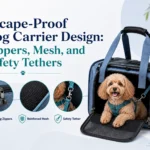
Combining top and side zipper access makes placing cats into an in cabin cat carrier frictionless. Multi-directional entry points allow handlers to load pets smoothly. Heavy-duty self-repairing zippers with locking sliders prevent escapes. A versatile in cabin cat carrier streamlines boarding with flexible loading angles. Padded mesh shoulder straps and balanced grab handles distribute weight evenly across the body.
-
Dual-Portal Loading: Top and side openings enable stress-free placement.
-
Escape-Proof Locking Sliders: Self-locking hardware prevents breakouts.
-
Ergonomic Load Distribution: Padded straps eliminate carrying fatigue.

8. Airline Approved Cat Carrier Material Science and Leak-Resistant Base Control
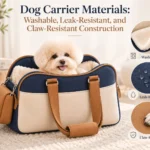
Preventing liquid seepage into core padding relies on waterproof TPU/PEVA coatings and bound-edge seam control. High-gauge TPU and PEVA coatings create an impenetrable liquid barrier. Sourcing teams specify ultrasonic edge binding and heat-sealed seams eliminating needle holes. Hydrostatic testing verifies absolute liquid retention. Removable multi-layer absorbent pads allow travelers to swap out soiled bedding instantly.
-
Ultrasonic Seam Sealing: Heat-welded boundary seams prevent liquid migration.
-
High-Gauge TPU Linings: Waterproof polymer coatings provide absolute fluid containment.
-
Modular Absorbent Bedding: Removable fleece mats facilitate rapid sanitation.

9. OEM Quality Control, Tolerances, and Version Control
Factory measurement protocols prevent dimensional mismatch errors enforcing strict size tolerances. Strict dimensional tolerances ensure mass-produced soft goods never exceed height limits. Quality control teams measure every production lot using automated laser gauges. OEM pet bag manufacturers enforce a strict plus-or-minus two-millimeter tolerance threshold across structural panel assemblies. Archived technical tech packs protect brand credibility.
-
Automated Laser Gauges: Factory inspections measure lots preventing oversize errors.
-
Strict Tolerance Thresholds: Two-millimeter assembly limits ensure airline compliance.
-
Verifiable Testing Records: Archived technical documentation protects brand credibility.
Frequently Asked Questions (FAQ)
-
What size cat carrier is airline approved?
An airline-approved cat carrier usually sits right around 17 to 18 inches long, 11 to 12 inches wide, and 8 to 10 inches high to slide cleanly beneath the seat in front of you. Sourcing flexible, soft-sided options with a bit of give up top is key—it lets the frame squeeze down under tight aircraft clearances without crushing the animal’s headroom.
-
Do airlines weigh cats in carriers?
Airlines love to throw pets on the scale right at check-in to make sure they are within cabin limits, which usually cap the total pet-plus-carrier weight right around 15 to 20 pounds. That is why building with featherlight structural materials is so clutch—it keeps the empty bag weight to a minimum so owners do not waste precious ounces on the scale.
-
Can a soft cat carrier be slightly larger than the limit?
A soft-sided cat carrier can usually get away with pushing size limits a bit because the flexible walls give under seat pressure. Rigid hard-sided crates don’t bend, meaning gate agents will shut them down instantly if they miss the height mark by even a fraction of an inch.
-
Does a cat need to stand in an airline carrier?
A cat doesn’t need to pace around inside, but the bag has to give them enough headroom to stand up, flip around, and curl up without feeling cramped. We engineer built-in arch supports to keep that vertical clearance solid so the top doesn’t sag down on them.
-
What should line the bottom of an airline approved cat carrier?
The floor needs to be locked down with a waterproof, pull-out absorbent pad held tight by heavy-duty hook-and-loop strips. Stacking a plush fleece top right over a leakproof TPU backing sheet guarantees peak hygiene without letting messes leak through to the frame.
-
How do I prevent escape at airport security?
To keep Houdini pets from popping the zippers open, you want to use auto-lock sliders that stay firmly put unless you actually pull the tab. When you hit airport security, TSA is going to make you take the animal out so you can walk them through the metal detector while the empty bag goes straight through the X-ray tunnel.
-
Are airline pet carrier dimensions strictly enforced?
Gate agents do not mess around with bag dimensions, especially on smaller regional flights where under-seat storage is tight. If a carrier misses the sizing mark, you are looking at an instant boarding denial—which is why holding tight manufacturing tolerances down to the millimeter is non-negotiable.
-
How do soft-sided carriers handle aircraft floor moisture?
To keep moisture away from the interior, these carriers rely on raised waterproof bases, seamless TPU tray inserts, and sturdy bottom feet that lift the whole fabric chassis well clear of damp cabin floors.