Navigating the landscape of security luggage in 2026 requires a shift from marketing-led sourcing to material-science-led procurement. As a manufacturer with 26 years of experience, I’ve witnessed the evolution of “security” from simple lockable zippers to advanced high-molecular fiber integration. A true anti theft bag is no longer a luxury for extreme explorers but a staple of modern travel safety gear, necessitating a manufacturer who understands the technical threshold of slash resistance and the complexities of high-tenacity weaving.

1. The Technical Baseline of Security Sourcing
The global demand for high-security carry solutions has transformed the production floor into a laboratory. In 2026, the “cutproof” label is no longer a generic claim but a performance-based metric that must be verified through rigorous laboratory standards.
- The 2026 Security Landscape: With the rise of the digital nomad and solo international travel, the anti theft bag has moved into the premium retail sector, requiring aesthetics to meet tactical performance. Consumers now expect security features to be invisible rather than industrial.
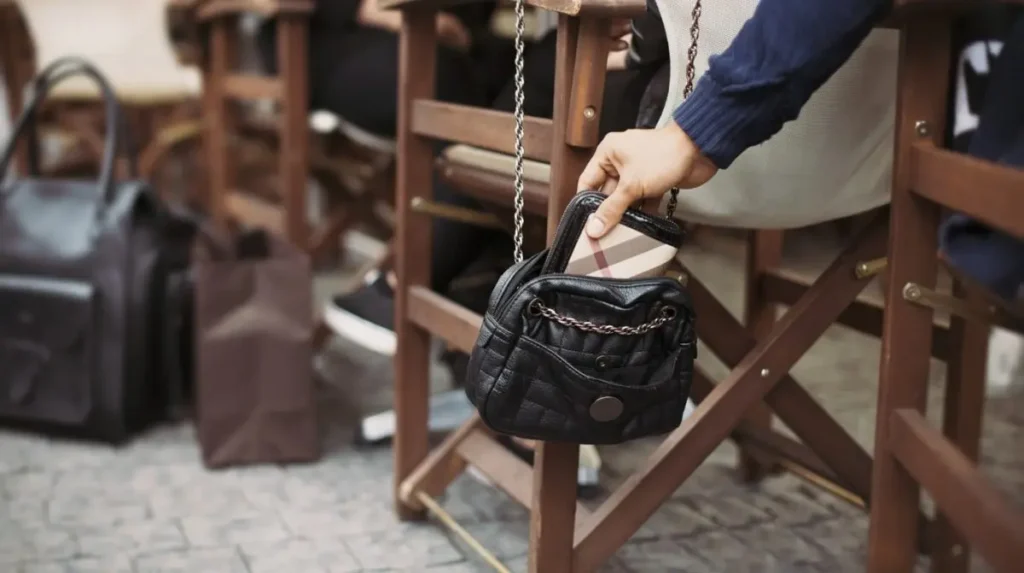
- Verification Protocols: When vetting a partner, the primary concern is whether their “slash-proof” claims are backed by ISO or ASTM standardized testing. Travel safety gear must be built on a foundation of verifiable fiber density and hardware integrity to withstand real-world theft scenarios, such as the “slash-and-grab” common in high-traffic tourist zones.
2. Material Engineering: What Are Cutproof Bags Made Of?
Understanding the chemistry of textiles is essential for any brand owner looking to command a premium price point. The choice of fiber directly impacts the bag’s weight, flexibility, and ultimate protection level.
2.1 Nylon vs. UHMWPE: Which is More Cut Resistant for 2026?
While traditional high-tenacity nylon is durable, Ultra-High Molecular Weight Polyethylene (UHMWPE) is the modern gold standard for cut resistance. Nylon vs UHMWPE: which is more cut resistant? UHMWPE offers a strength-to-weight ratio significantly higher than steel, providing superior resistance to lateral blade pressure. It is essentially the same material used in ballistic vests, adapted for civil luggage.
2.2 High-Tenacity Fabric Bag: Evaluating Denier and Fiber Density Standards
A High-tenacity Fabric Bag typically relies on 1680D or higher denier counts. However, density alone does not equate to cut-proofing; the weave must be tight enough to prevent a blade from finding purchase between threads. When asking what are cutproof bags made of?, ensure your manufacturer utilizes a blend of glass fibers, aramid fibers, or UHMWPE to achieve a true safety rating that remains flexible for daily use.
3. The Science of Resistance: How Do Cutproof Bags Work to Prevent Theft?
The engineering behind a slash-proof vessel is a multi-layered defense system. It is designed to exhaust the thief’s effort by making the material’s structural failure impossible with standard tools.
3.1 Beyond the Fabric: Steel Mesh Reinforced Bag and Inner Cage Structures
Most high-performance designs utilize a Steel Mesh Reinforced Bag construction. This involves laminating a flexible eXomesh or stainless steel wire grid between the outer shell and the inner lining. This creates a “cage” that remains intact even if the outer fabric is sliced, preventing the contents from spilling out.
3.2 Can a Regular Knife Cut Through a Slash Proof Bag? Analyzing Blade Sharpness vs. Material Toughness
To answer how do cutproof bags work to prevent theft?, we must look at energy dissipation. Can a regular knife cut through a slash proof bag? A standard pocket knife may score the surface of a slash proof bag, but the reinforced internal grid or the high-modulus fibers prevent the blade from penetrating the storage cavity, thereby protecting the contents from being “fished” out or falling into the hands of a waiting accomplice.
4. Hardware Integrity: Are Slash-Proof Straps Really Effective?
The most common point of attack in modern theft is not the bag body, but the strap. Manufacturers often overlook this vulnerability, leading to a catastrophic failure in “cut-and-run” scenarios.
4.1 Internal Reinforcement: The Mechanics of a Cutproof Bag Strap
A reliable cutproof bag strap is not just thick webbing; it is a composite component. It must contain concealed high-tensile stainless steel wires running through the center. Are slash-proof straps really effective? Only if the wire is anchored securely into the bag’s internal frame using reinforced metal grommets, preventing it from being pulled out after a partial cut.
4.2 Best Anti-Theft Bag with Steel Reinforced Straps: Preventing the “Cut-and-Run”
The best anti-theft bag with steel reinforced straps utilizes dual-wire systems. This redundant protection ensures that even if one wire is compromised by a heavy-duty blade, the second wire maintains the bag’s connection to the user. This creates a “tug-of-war” that the thief invariably loses, as the time required for a second cut increases the risk of detection.
5. Security Integration: Cutproof Bags with Anti-Theft Features and RFID Blocking
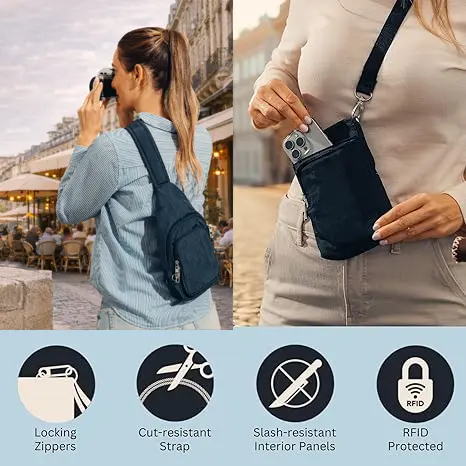
Modern security is a combination of physical and digital defense. A bag that protects against a knife but fails against a digital skimmer is obsolete in the 2026 market.
5.1 Shield-Pack Evolution: Combining Cutproof Bag with RFID Blocking
Cutproof bags with anti-theft features and RFID blocking are now the baseline industry standard. A Cutproof Bag with RFID Blocking incorporates a nickel-copper metallic fabric in the internal pockets, creating a Faraday cage that prevents unauthorized scanning of credit cards and passports. This is critical for urban travelers who are frequently targeted in crowded subways.
5.2 Hidden Zipper Slash-proof Bag: Structural Defense Against Pickpockets
The Hidden Zipper Slash-proof Bag utilizes a “Rear-Open” design. By placing the primary access point against the user’s back, the manufacturer creates a structural deterrent. When combined with cut-resistant panels on the front and sides, the bag becomes a fortress that is virtually inaccessible to pickpockets in dense urban environments.
6. Manufacturing Standards: High ANSI Level Cut Resistant Fabric for Custom Bags
For B2B sourcing, technical certifications are the only objective way to ensure quality across large-scale production runs.
6.1 Understanding ANSI Level A1-A9: What to Request from Your Manufacturer
When sourcing High ANSI level cut resistant fabric for custom bags, you must specify the level. Level A1-A3 is suitable for light protection, while A4 and above are required for true high-security gear. Your manufacturer should provide ASTM F2992-15 test results to validate these claims. Requesting a “level A5” fabric for the bottom panel of a bag is a common professional standard for premium security brands.
6.2 Wholesale Customizable Slash Proof Bags for Corporate and Retail Branding
Providing wholesale customizable slash proof bags for corporate gifts requires a balance of safety and brandability. Look for factories that can sublimate or screen print on high-performance fibers without compromising the integrity of the cut-resistant coating. Specialized heat-pressed logos are often better suited for UHMWPE fabrics than traditional embroidery, which can create weak points in the weave.
7. Performance Evaluation: Are Cutproof Bags Truly Effective Against Theft?
As experts, we must evaluate the “ROI of Protection” for the end consumer. Does the technology translate to real-world safety, or is it merely psychological?
7.1 Do Pickpockets Really Slash Bags?
Do pickpockets really slash bags? While traditional pickpocketing is more common, “slashing” is a significant threat in specific global hotspots. Are cutproof bags truly effective against theft? They are highly effective as a passive deterrent; most thieves are “speed-shoppers” who will move to a softer target once they realize the bag is reinforced and won’t yield to a quick blade strike.
7.2 Reviews of Top-Rated Cutproof Bags: Analyzing Laboratory Test Results
In reviews of top-rated cutproof bags, the consistent winners are those that maintain flexibility. A bag that is too stiff is uncomfortable and eventually rejected by the consumer. The goal of a professional manufacturer is to achieve high slash resistance while maintaining a “soft touch” textile feel, often achieved through complex knitting patterns of high-density polyethylene.
8. Specialized Category: Urban Commuter Anti-slash Bag and Tech Protection
The urban commuter market focuses on protecting high-value electronics like laptops and tablets from the “side-slash” theft.
8.1 Anti Pickpocket Backpack for Hidden Laptop Storage and Office Security
An Anti pickpocket backpack for hidden laptop storage combines a cutproof bag structure with internal shock-absorption. The internal laptop sleeve is often surrounded by a 360-degree cut-resistant layer to prevent “side-access” thefts, where thieves cut a small slit in the side of the bag to slide out a slim computer without the user noticing.
8.2 Urban Commuter Anti-slash Bag: Balancing Daily Weight with Safety Gear
The Urban commuter anti-slash bag must be lightweight. Using advanced UHMWPE weaves allows an Anti-Theft Backpack to weigh under 1kg while providing professional-grade protection. This ensures that safety gear doesn’t become a physical burden during a daily commute on foot or via bicycle.
9. Niche Market Security: Small Slash Proof Crossbody Bag for Women’s Security
Women’s security gear is a rapidly growing niche that requires a focus on aesthetics, “stealth” security, and ergonomic accessibility.
9.1 Pickpocket Proof Cross Body Bag: Strategic Compartment Design for Valuables
A Pickpocket proof cross body bag utilizes “locking sliders” that require two hands or a specific sequence to open. When combined with a small slash proof crossbody bag for women’s security, it provides a multi-layer defense that is both stylish and highly functional for night-time urban travel.
9.2 The Ghost Bag Concept: Designing a Theft Proof Bag that Blends In
The most effective theft proof bag is the one that doesn’t look like one. We refer to this as the “Ghost Bag”—it features internal steel reinforcement and hidden RFID pockets but looks like a standard fashion purse. This prevents the user from being marked as a high-value “tourist” target, which is the most effective form of security: staying off the thief’s radar entirely.
10. Multi-Functional Resilience: Waterproof Anti Theft Backpack with Cut Resistant Straps
The ultimate sourcing goal for the 2026 season is the convergence of extreme durability, waterproofing, and high-level security.
10.1 Marine Grade Security: Sourcing the Cutproof Beach Bag
A cutproof beach bag is a unique requirement. These bags must be waterproof to protect against sand and sea, but also cut-resistant so they can be locked to a fixed object (like a beach chair) while the user is swimming. This requires PVC-coated UHMWPE fabrics that are both salt-water resistant and blade-resistant.

10.2 Future Proofing: The Best Cutproof Bag 2026 Performance Benchmarks
The best cutproof bag 2026 will feature smart-lock integration alongside a waterproof anti theft backpack with cut resistant straps. As a brand owner, your benchmark should be a bag that offers:
- ANSI Level A4 protection on at least 60% of the surface area.
- IPX6 waterproof rating for electronics protection.
- Modular internal compartments that are also individually slash-resistant.
Conclusion
Building a successful Slash Proof travel bag line is a commitment to quality over cost. As you evaluate your next Cutproof Bag manufacturer, prioritize those who invest in UHMWPE integration and reinforced hardware over those who merely follow fashion trends. The integrity of your brand—and the safety of your customers—depends on the one time a blade fails to penetrate your product.