1. Soft Sided Dog Carrier and Hard Sided Dog Carrier: Define the Two Designs
Selecting between a soft sided dog carrier and a hard enclosure requires evaluating structural rigidity and material flexibility. A soft dog carrier bag utilizes flexible fabrics supported by internal panels while a hard enclosure relies on molded plastic shells. Soft carriers rely on flexible textiles supported by internal PE boards or fiberglass rods to create a collapsible yet stable environment. These units are typically carried via shoulder straps or hand grips, positioning the pet close to the owner’s body. Hard carriers utilize rigid molded polyethylene or polycarbonate halves secured with heavy-duty steel hardware or snap locks.
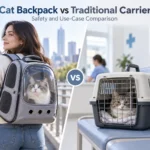
Rigid plastic enclosures hold their shape under punishing loads and are built strictly for secure hand or cargo transit, unlike canine packs that strap onto a dog’s back so they can carry their own trail gear. Transport crates keep animals completely enclosed in a protective shell to restrict erratic movement and guarantee safety on the move. Mixing up a wearable hiking pack with a hard sided dog carrier is a dangerous mistake during travel, as dog carrier backpacks completely lack the rigid, fully enclosed structural framing required to keep a pet securely contained.
-
Structural Rigidity Comparison: Soft enclosures use flexible technical textiles over internal PE boards, whereas hard carriers utilize molded rigid plastic shells.
-
Carrying and Transit Mechanics: Soft units use shoulder straps for close body carriage while hard enclosures rely on heavy hardware for cargo and hand transit.
-
Safety Boundaries: Transport carriers fully enclose the animal inside a secure compartment, preventing the severe safety hazards associated with open dog-worn hiking packs.

2. Quick Comparison by Use Case, Pet Size, and Trip Duration
Selecting the correct transport medium depends entirely on the operational environment, the animal’s physical dimensions, and the expected transit duration. Short urban commutes on public transit demand lightweight soft units that compress easily when empty. Extended travel scenarios involving cargo holds or long road trips require the impact resistance of hard plastic shells. Urban environments favor flexibility while long-distance freight demands maximum structural protection. Small dogs under 15 pounds thrive inside flexible soft pet carrier designs that offer comfortable shoulder ergonomics. Medium pets up to 30 pounds require reinforced structures with rigid floor inserts to prevent sagging. Heavy or aggressive pets exceeding 30 pounds necessitate molded hard enclosures to prevent escape and handle high load stress.
| Carrier Design Category | Primary Structural Material | Optimal Operational Use Case |
| Soft Sided Dog Carrier | Flexible technical textiles with internal PE boards | Urban public transit and short passenger flights |
| Hard Sided Dog Carrier | Molded polyethylene or polycarbonate shells | Long-distance cargo transport and vehicle transit |

3. When Soft Pet Carrier Is the Better Choice
Soft pet carrier setups are the ultimate choice for urban commuters who value lightweight mobility, effortless folding for tight apartment storage, and flexible frames that let handlers hug the bag’s center of gravity close to their body. That flexibility comes with trade-offs, like vulnerability to heavy chewing and zero crash protection in a vehicle collision, plus the risk of floor buckling if overloaded past its weight limit. On the flip side, pliable walls let animals subtly shift their posture to stay calm during long stretches of travel, though keeping that balance steady on the go relies entirely on heavy-duty baseboards and dialed-in, adjustable shoulder straps.
-
Enhanced Breathability: Mesh window panels allow optimal airflow and visibility for calm pets during short commutes.
-
Compact Storage: Flexible frames fold flat for easy storage in narrow spaces when not actively in use.
-
Ergonomic Portability: Lightweight soft structures distribute weight comfortably across the owner’s shoulder or hands.

4. Size, Fit, and Load Distribution
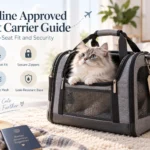
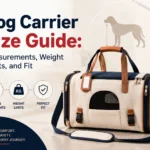
Proper sizing prevents animal injury and ensures the enclosure maintains structural integrity throughout transit. External manufacturer measurements often include protruding pockets and padding that reduce the actual usable interior volume. Sourcing teams must calculate the exact internal dimensions accounting for compressed wall linings and floor insert thickness. A correct fit allows the pet to stand up, turn around, and lie down comfortably without touching the mesh top.
Poorly engineered bags suffer from base sag that shifts the pet’s weight downward and strains the owner’s shoulder. Integrating rigid PE boards encased in heavy oxford fabric prevents floor deformation under heavy loads. Maintaining a stable center of gravity requires secure attachment points for shoulder straps aligned with the bag’s vertical axis. Every standard dog travel carrier must undergo rigorous load balancing audits during the initial prototyping phase.
-
Internal Volume Audit: Measuring usable internal space prevents cramped conditions for the animal during transit.
-
Baseboard Rigidity: Rigid PE board inserts eliminate floor sag and distribute weight uniformly across the chassis.
-
Strap Alignment: Shoulder strap attachment points aligned with the vertical axis maintain a stable center of gravity.

5. Safety, Ventilation, and Escape Prevention
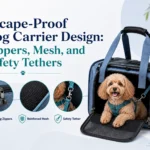
Escape-proof security relies on smart hardware layout and balanced ventilation. Every entry zip needs locking sliders or metal clips so clever dogs cannot nudge them open, while internal leashes clip straight to a harness to stop sudden jailbreaks when top flaps are unzipped. When engineering a soft sided dog carrier, pairing these safety tethers with puncture-proof vinyl-coated steel mesh ensures maximum airflow without risking claw damage.
Adequate airflow is important. It needs mesh windows on least three sides of the soft-sided enclosure. This helps stop the inside from getting too hot. Much mesh can make pets feel more anxious. It can show them much of the outside world. That can be too much for them, in places. Putting privacy panels with mesh together helps. It gives the comfort when moving around. A well-designed structured dog carrier incorporates reinforced skeletal framing to prevent accidental structural deformation under pressure.
-
Self-Locking Zippers: Prevents active pets from pushing open entry points from the inside during travel.
-
Internal Safety Tethers: Clips directly onto pet harnesses to prevent escape when opening top loading flaps.
-
Claw-Resistant Mesh: Plastic-coated steel mesh or heavy-duty PVC netting withstands scratching and biting.

6. Materials, Cleaning, and Long-Term Durability
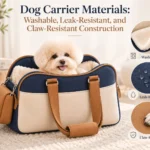
Building a collapsible pet carrier comes down to smart material chemistry—starting with rugged 600D to 1680D PU-coated polyester shells that shrug off daily abuse and wipe-clean PEVA or nylon linings that make cleanup a breeze after accidents. Internal skeletons lean on resilient fiberglass rods, dense EPE foam, and zinc-alloy hardware, while removable fleece-topped floor boards keep cleaning simple. Choosing the right textiles means the exterior can handle repeated disinfectant scrubbing without stripping the waterproof membrane or fading, and accessible stitching ensures repairs are a non-issue. Getting folding designs market-ready requires bulletproof hinge engineering to eliminate material fatigue and structural failure over thousands of pack-and-unpack cycles.
-
High-Denier Shells: Durable 600D to 1680D polyester fabrics with PU coatings resist abrasion and moisture.
-
Wipe-Clean Linings: Waterproof PEVA internal linings manage accidental pet waste and simplify daily cleaning.
-
Accessible Stitching: Clean pattern construction allows easy factory repairs for damaged zippers or mesh panels.

7. Price, Packability, and Retail Positioning
Manufacturing complexity shapes your entire profit structure. Soft builds require intensive multi-panel sewing and hardware labor, while rigid alternatives demand heavy upfront mold costs offset by scale. Budget SKUs rely on basic 300D polyester, whereas luxury lines integrate matte alloy hardware and waterproof bases. Sourcing a foldable dog carrier slashes ocean freight volume and container consolidation fees, supercharging international distribution efficiency.
-
Labor-Intensive Sewing: Multi-panel soft designs require skilled stitching and binding application to ensure durability.
-
Tooling Investments: Hard carriers demand high upfront injection-mold costs offset by large-scale production volume.
-
Material Tiering: Selecting appropriate denier fabrics and hardware finishes defines the target retail price bracket.
8. OEM Design Decisions for Pet Brands
Skipping the tech pack is an expensive mistake; defining exact denier specs, webbing tensile ratings, and hardware finishes upfront is the only way to keep mass production on track and eliminate factory guesswork. A solid requirements matrix bridges the gap between your design desk and the production floor, locking down target retail price points and strict safety standards before anyone cuts a single yard of fabric. Prototypes have to survive brutal drop tests, punishing zipper fatigue cycles, and dead-weight load simulations to sniff out structural weak points early. Nail those pre-production checkpoints—verifying stitch density and hardware pull strength—and you guarantee that every high-end soft sided dog carrier rolling off the line hits the docks with zero defects.
- Comprehensive Tech Packs: Detailing exact denier ratings and hardware specifications eliminates ambiguity during factory sampling.
-
Rigorous Prototype Testing: Drop testing and static load simulations identify structural weaknesses before mass production.
-
Quality Checkpoints: Pre-production sample inspections verify stitch density and hardware attachment strength.
9. Final Decision Checklist
Trying to build an all-in-one bag for city commutes, airline cabins, and rugged backcountry trails is a trap that leads to bloated, overpriced gear nobody wants. Winning brands lock onto a single mission, pairing crystal-clear marketing with laser-focused design to crush retail conversion. When you are moving past flexible soft-goods and engineering a hard sided dog carrier, getting cabin dimensions down to the millimeter and backing up every impact claim with real test data is non-negotiable to dodge liability nightmares. Partnering with a proven OEM turns those strict safety specs and structural targets into a bulletproof commercial reality.
-
Single Primary Mission: Focus product development on one specific travel use case to maximize retail conversion.
-
Dimension Verification: Confirm exact airline under-seat clearance limits before marketing compliance claims.
-
Transparent Technical Data: Providing accurate stress test data builds long-term consumer trust and brand credibility.
Frequently Asked Questions (FAQ)
-
Are soft dog carriers safe?
Used within their rated weight limits and strapped in right, compliant fabric pet totes offer a secure ride for mellow animals, bolstered by internal safety leashes, locking zippers, and rigid base panels that hold their shape. That said, they simply cannot match the heavy-duty impact defense of molded plastic crates if a serious vehicle collision occurs.
-
Are hard carriers better for car travel?
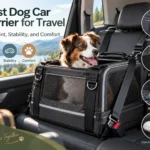
Hard carriers provide superior protection during car travel because their rigid plastic shells absorb impact forces and prevent crushing. They secure easily with vehicle seatbelts and contain anxious pets effectively. Soft carriers require additional securing mechanisms to prevent shifting on car seats.
-
Can soft-sided carriers go on airplanes?
Flexible frames let a soft sided dog carrier compress beneath tight airline seats or pass cargo requirements, though checking specific carrier limits beforehand is essential to avoid gate rejections.
-
Which carrier is easier to clean?
Molded plastic crates are super easy to clean. You can simply hose down the inside and spray on disinfectant in just a few seconds. Soft totes need a little effort. They depend on machine-washable fleece mats and wipe-clean PEVA linings to deal with everyday spills and messes. Still if you keep up with care both types stay fresh and free of odors.
-
Can a dog chew through a soft carrier?
Anxious pups with a mission can easily shred standard mesh given enough time and teeth. Defeating destructive chewers means stepping up to vinyl-coated steel wire mesh and bulletproof ballistic nylon, though getting pets properly crate-trained long before a trip is the ultimate hack to keep them chill on the road.
-
Do collapsible carriers lose shape?
Cheap collapsible crates tend to sag and lose their shape once the internal support boards warp under pressure. Premium builds defeat this issue with high-density fiberglass stays and reinforced polyethylene panels that refuse to bow under heavy loads, provided owners fold and store them right to dodge permanent frame warping.