The global supply chain landscape of 2026 demands a radical shift from focusing on unit price to mastering landed costs. For high-volume importers, the traditional bulky silhouette of a Duff bag has become a financial liability due to its poor packing density. By transitioning to engineered foldable structures, brands can effectively eliminate the “shipping air” tax that erodes profitability.
This report analyzes how structural innovation in the Duffle bag for men and women sectors transforms logistics from a cost center into a competitive advantage.
1. The Landed Cost Crisis: Why Logistics Are Killing Your Margins in 2026
1.1 Analyzing CBM vs. Product Value: The High Cost of Shipping “Air”
The primary challenge in sourcing a Sports bag duffle lies in its inherent volumetric inefficiency. Traditional gym bags are often shipped semi-stuffed or with rigid bases that prevent compression, leading to an unfavorable Cubic Meter (CBM) to product value ratio.
The Cold Truth of 2026 Logistics: Shipping companies charge you for the space you occupy, not just weight. Every inch of empty air inside a stiff bag is a hidden fee. In 2026, shipping air is the fastest way to lose money; rigid bags can waste up to 40% of your container.
Our smart-fold engineering allows bags to squish down flat for the journey but pop back into a premium shape on the shelf. These flexible designs help you cram more into every shipment, cutting your carbon footprint and keeping profits in your pocket.
1.2 How a Reliable Duffel Bag Manufacturer Solves the Freight Puzzle
A sophisticated Duffel manufacturer utilizes precision pattern engineering to ensure even a Large sports duffle can collapse into a flat-packed state. By removing rigid bottom boards and replacing them with high-density, foldable PE inserts, we tackle the “Volumetric Penalty” head-on.
- Vacuum Compression: Advanced suppliers offer vacuum-sealed packaging for bulk orders, reducing volume by an additional 15-20%.
- Nesting Strategies: Factories design Small duffel bag models to nest perfectly inside larger ones during transit.
- Freight Optimization: Direct collaboration with a Duffel bag supplier allows for customized carton dimensions that maximize the interior space of maritime containers.
2. Engineering the Foldable Duffel Bag: From Design to Density
2.1 Structural Innovation: Maintaining Durability in a Packable Silhouette
The fear that a foldable Mens duffle bag lacks structural integrity is a common misconception. Modern engineering utilizes “Memory Fabric” and reinforced seam binding to ensure the bag regains its profile immediately.
- High-Density Bar-Tack Stitching: Implemented at stress points (handle junctions) to support weight while maintaining flexibility.
- Gusset Engineering: Strategic piping and reinforced edges give the bag a “brain,” allowing it to become self-standing once filled without needing heavy, rigid boards.
- Hardware Integration: Lightweight, high-strength resin zippers replace heavy metal alternatives to reduce weight and folded thickness.
2.2 Material Selection: Performance-to-Weight Optimization
We prioritize fabrics with high denier counts (420D to 900D Ripstop Nylon) engineered for low physical weight.
- Ripstop Technology: A reinforced grid stops punctures and tears from spreading while remaining flexible enough to fold.
- TPU Laminates: Unlike traditional PVC, TPU provides a superior moisture barrier while maintaining flexibility and reducing bulk.
- Abrasion Resistance: High-performance polyesters ensure the bag survives the high-friction environment of automated baggage handling systems.
3. Enhancing Retail Appeal: Sourcing a Versatile Duffel Bag for Men
3.1 Visual Versatility and Durability
In the premium men’s segment, black remains the benchmark. Black substrates naturally hide scratches and dust from shipping, keeping products looking new.
- The “Cloud-tech” Look: Matte finishes provide a high-end, discrete aesthetic perfect for the urban professional.
- Minimalist Branding: Tonal logos ensure the bag fits into high-stakes meetings or trendy coworking spaces.
- Resale Value: Classic colors like black and slate have higher resale value, appealing to the conscious “buy once, buy better” shopper.
3.2 Sizing Logic: Small Duffel Bag vs. Large Capacity
- The “Goldilocks” Zone: The 30L-40L range is ideal for most commuters, fitting gym gear and laptops while remaining airline carry-on compliant.
- Inventory Variety: From compact bags for kids to massive haulers for team gear, offering a range of sizes ensures every consumer niche is met.
4. The Travel Market: Optimizing Sourcing for Aviation
4.1 Aviation Compliance: Under-Seat Designs
As airlines tighten restrictions, a Small duffel bag fitting the 18 x 14 x 8-inch footprint is a high-demand SKU.
- Soft-Sided Advantage: Foldable designs squish into tight airline sizers where rigid suitcases fail.
- Trolley Sleeves: Integrated rear sleeves make the duffel a perfect “personal item” for long-haul travel.
- External Pockets: Dedicated tech and passport compartments facilitate faster security checks.
4.2 The Leather Duffel Market
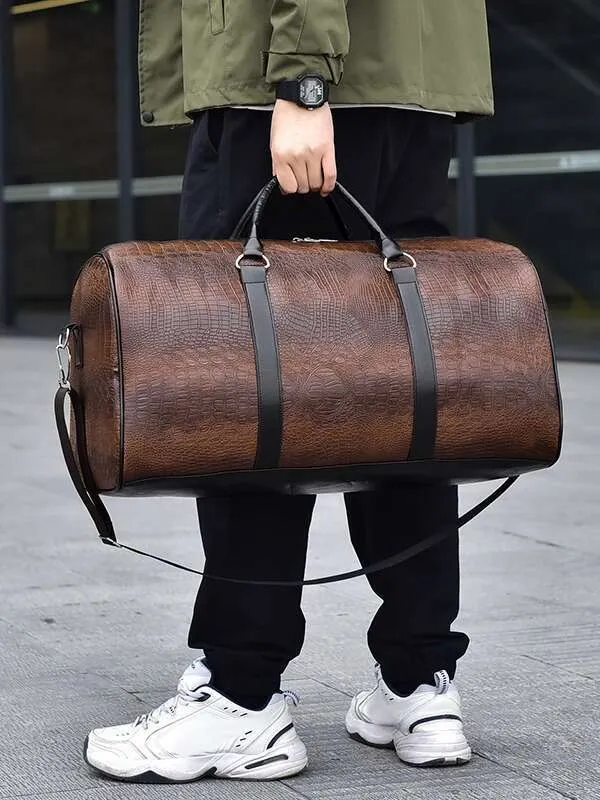
The Leather duffel bag market is adapting by using “Nappa” or “Glove” leathers that fold without permanent creasing.
- Hybrid Designs: Combining leather accents with nylon bodies provides a premium look with foldable functionality.
5. Privacy and Security: Scent Proof Technology
5.1 The Rise of Smell Proof Bags
The market for the Odor proof duffle bag has expanded into the privacy sector, with a 25% CAGR in North America and Europe.
- Activated Carbon Linings: Multi-layer filters trap molecules inside.
- Sealed Seams: Heat-welded zippers ensure 100% scent containment.
5.2 Multi-Layer Defense
- Moisture Management: High-performance linings protect the carbon layer from sweat and dampness, ensuring the bag keeps trapping smells at 100% power.
6. Specialized Niches: Kids and Junior Gear
6.1 Safety and Washability
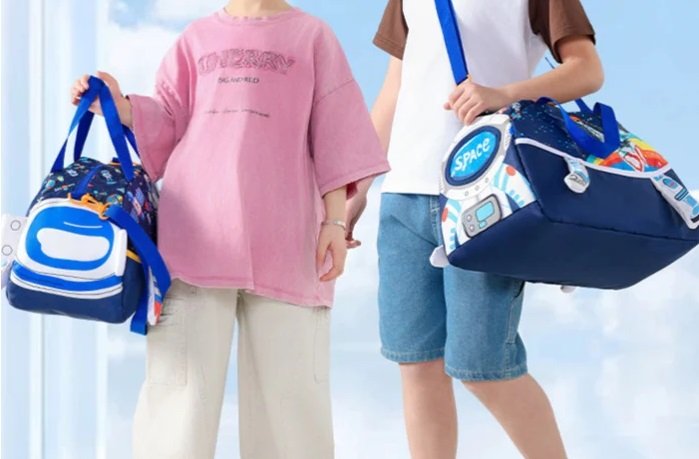
Sourcing a Kids duffel bag in 2026 requires alignment with REACH and CPSIA frameworks.
- Non-Toxic: Fabrics are free from phthalates and lead.
- Machine Washable: Reinforced internal bonding survives repeated sanitation cycles.
6.2 Lightweight Ergonomics
The Mini duffle bag is preferred for junior athletes to prevent spinal strain by centering the load. Oversized zippers allow children with developing motor skills to operate the bag independently.
7. Security Features: The Lockable Duffel Bag
7.1 Theft Prevention
A Lockable duffel bag integrates TSA-approved combination locks and digital security.
- Puncture-Resistant Zippers: Double-layered zips prevent “pen-poke” break-ins.
- RFID-Shielding: Pockets act as a digital vault, blocking hackers from scanning credit cards or passports.
7.2 Anti-Theft for the Women’s Category
In the Duffel bag women market, security meets elegance through discreet hidden locks and slash-proof straps reinforced with wire to prevent “snatch and grab” incidents.
8. Athletic Performance: Gym Gear Logistics
8.1 Functional Compartments
The “Cool” factor is defined by efficiency. A Duffel bag for shoes compartment with exterior venting is a non-negotiable 2026 feature.
- Wet/Dry Separation: Antimicrobial linings prevent cross-contamination.
- Tech Protection: Fleece-lined pockets protect smartwatches and phones.
8.2 Ventilation
- Laser-Cut Vents: Allow airflow without compromising water resistance.
- Quick-Dry Fabrics: Prevent mildew growth during humid maritime transit.
9. Identifying the Right Partner: Bag OEM Supplier Selection
9.1 Bypassing Traders for a Duffel Bag Factory
Working directly with a Duffel bag factory can save 20% on costs.
- Transparency: Faster technical adjustments during prototyping.
- Quality Components: Savings from eliminating middlemen are reinvested into YKK zippers or Duraflex buckles.
9.2 Quality Control (QC) Protocols
A reliable supplier implements a three-stage process:
- IQC (Incoming): Testing fabric strength and colorfastness.
- IPQC (In-Process): Inspecting stitch density and seam alignment.
- FQC (Final): Load-testing and verifying freight-ready dimensions.
10. Customization and Brand Growth
10.1 Flexible MOQs
Modern Duffel bag factory operations use Lean Manufacturing to offer lower MOQs for a Customized duffel bag, allowing brands to test trends like “Pickleball” gear with low risk.
10.2 Prototyping Speed
A proactive OEM duffel bag manufacturer can turn a 2D sketch into a 3D physical sample in 7-10 days. CAD precision ensures the Custom duffel bag fits perfectly in its intended shipping carton.
Conclusion: The Shift to Density is the Shift to Profit
In 2026, the sourcing strategy for duffel bags must evolve. Profitability is won in the container. By adopting Foldable Duffel Bag designs, importers can increase cargo density by up to 40%, directly slashing landed costs.
Expert Advice: When visiting a factory, don’t just look at the bag—inspect the packaging line. A factory that masters flat-packing is a partner that protects your bottom line.