1. Understanding the Science
Most consumers assume that a thick wall equals better insulation, yet thermal failure usually occurs because of a misunderstanding of thermodynamics. An insulated lunch bag keeps food warm by creating a multi-layered defense system against three types of heat transfer: radiation, conduction, and convection. When analyzing the lunch kit, we focus on the R-value of the internal foam and the reflectivity of the lining to ensure the product transcends being just “decorated fabric.”
1.1 The Role of Radiant Heat Barriers in PEVA and Aluminum Linings
The internal lining is the first line of defense in any high-performance durable lunch bag.
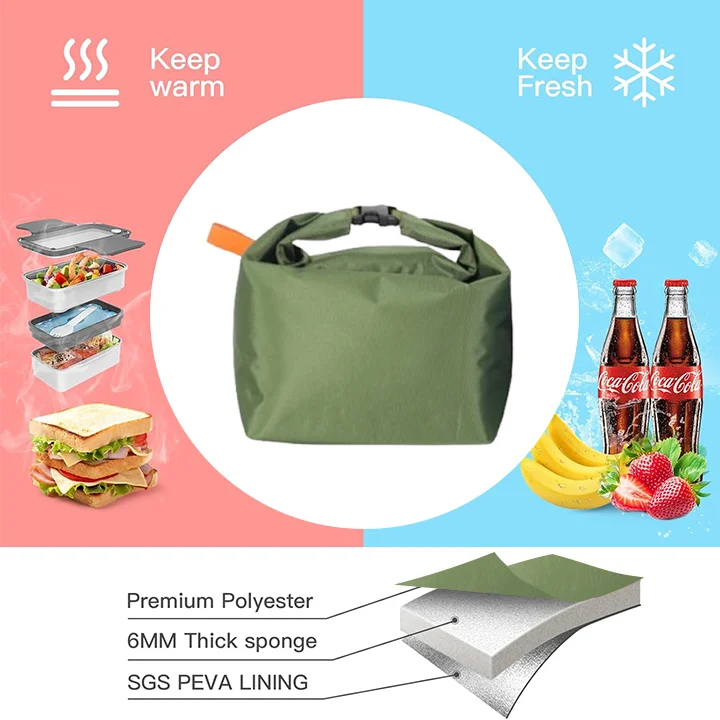
- Reflectivity: Reflectivity is the core of “Cold-Chain” integrity. Our 2026 thermal series features high-purity aluminum lamination that reflects 95% of radiant energy. Combined with our high-density EPE core, we’ve engineered a dual-action shield that outperforms standard PEVA-only interiors. It’s a high-precision blueprint for the extended commute.
- PEVA Advantages: PVC is a structural liability in the cold; PEVA is the engineering standard. We leverage low-temp resilient PEVA to prevent the liner from stiffening or fracturing in industrial freezers. It’s a high-precision blueprint designed for long-term elastic recovery and food-grade safety. Sustainability, with zero compromise on performance.
- Heat Retention Comparison:
| Lining Type | Radiant Heat Reflection | Food Safety Grade | Durability |
|---|---|---|---|
| Standard Foil | High | BPA-Free | Moderate |
| Heavy-Duty PEVA | Moderate | FDA-Approved | High |
| Specialized Mylar | Very High | Industrial Grade | Low (Crinkles) |
1.2 Conduction and Convection: Why Seam Quality Matters
Thermal leakage is often a result of “thermal bridging” through low-quality zippers or stitched seams.
- The Benefit of Insulation: What are the benefits of using a lunchbox? Beyond simple carry, it maintains a micro-climate. If the seams are stitched rather than heat-welded, cold air escapes through the needle holes via convection.
- Foam Density: Density is the silent guardian of the “Cold Chain.” By integrating micro-cellular EPE, we’ve eliminated the convection currents found in low-grade open-cell foams. This ensures a consistent thermal shield that survives compressive stress without losing its insulating properties. It’s a high-precision blueprint for the industrial professional. Precision thermal engineering, built for the 2026 climate.
2. Material Wars: Are Neoprene Lunch Bags Better Than Polyester?
The debate of are neoprene lunch bags better than polyester? is central to sourcing the right durable lunch box. In our 26 years of manufacturing, we have found that the “best” material depends entirely on the end-user’s environment, particularly when considering what is the best lunch bag for 12 hour shift? requirements.
2.1 Thermal Conductivity: Comparing Synthetic Fibers for Long Shifts
Rethink the material blueprint for endurance. Neoprene’s single-layer structure fails during long-shift thermal exchange. We engineer our 12-hour professional packs using a multi-layer polyester architecture and seamless interior tubs. This delivers superior thermal retention for the most demanding work cycles.
- Polyester (600D/900D): Offers a rigid structure allowing for thicker foam inserts (up to 10mm), which is essential for extended temperature retention.
- Neoprene: While naturally insulating and stylish, its thin profile (typically 3mm-5mm) lacks the thermal mass required for a full day. It is better suited for short commutes.
2.2 The Durability Factor: Choosing the Best Fabric
Building a durable lunch box requires a balance of abrasion resistance and thermal stability.
- Outer Shell Resilience: 900D Oxford polyester provides the highest puncture resistance, protecting the delicate internal insulation layers.
Material Comparison for Professional Use:
- Polyester: High structural integrity, customizable insulation thickness, excellent for heavy-duty use.
- Neoprene: High flexibility, machine washable, but prone to stretching and limited thermal windows.
3. The Eco-Friendly Dilemma: Thermal Performance of RPET Fabric
Ethics shouldn’t weaken the blueprint. We’ve re-engineered the RPET lunch pack through advanced textile bonding, creating a high-performance barrier that matches virgin materials. In 2026, true sustainability is a high-tenacity requirement. We ensure our eco-friendly gear survives the mechanical stress of daily use. Eco-performance, without compromise.
3.1 Insulation Challenges with Sustainable Materials
Inconsistent yarn is a brand risk. We’ve solved the problem of recycled fiber volatility by sourcing single-origin post-consumer plastic. This ensures a homogenous textile matrix with zero color-shift and industrial-grade abrasion resistance. It’s a high-precision blueprint for the conscious professional.At Aimazing Bag, we’ve standardized our GRS-certified supply chain to ensure that recycled RPET meets the same high-tenacity benchmarks as virgin polyester. Sustainability, stabilized.
- Tensile Strength: Standardized sustainability is the new benchmark. We’ve bridged the gap between recycled filaments and virgin 600D polyester. Our 100% GRS-certified textile matrix is engineered to withstand the gravitational stress of premium glass meal-prep sets. In 2026, eco-friendly is a high-performance specification.
- Thermal Barrier Integration: Glue-free lamination is the new engineering benchmark. Our thermal-bonding process fuses PEVA liners directly to recycled polyester, creating a superior heat-reflective shield. This eliminates the risk of delamination and maximizes cold-chain retention. It’s a high-precision blueprint for the modern professional.
3.2 Balancing Sustainability and Performance
An eco-friendly lunch pack is only “green” if it lasts. A bag that fails after three months contributes to landfill waste, negating its recycled origin.
- Lifecycle Engineering: We focus on reinforced stress points and “X-box” stitching on handles to ensure the RPET (Recycled) Fabric Lunch Bag remains in use for years.
- Eco-Certification: Using recycled materials allows brands to command a premium price while meeting global ESG (Environmental, Social, and Governance) targets.
4. The Leakproof Standard: Solving the Odor and Hygiene Problem
A cooler bag that leaks or retains odors is a failed engineering project. We achieve 100% leakproof integrity through seamless high-frequency welded liners and integrated antimicrobial treatments. At Aimazing Bag, we don’t just build bags; we engineer sanitary, airtight environments. Protect your food, protect your brand.
4.1 Heat-Welding vs. Stitching
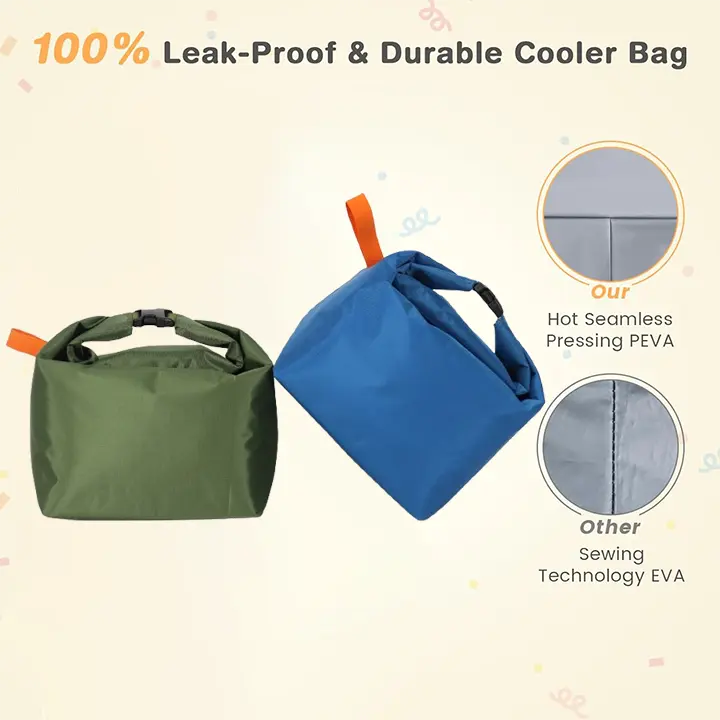
A stitched liner is a failed barrier. Needle holes allow liquids to bypass the surface and saturate the insulation foam, leading to permanent odors that cannot be washed away. We’ve re-engineered the internal architecture with heat-sealed seamless liners to ensure 100% leakproof hygiene.
- Sonic Welding: Engineering the “Safety Net” for lunch gear.Our high-frequency welding process creates a unitary interior tub that is 100% leakproof. By removing traditional stitches, we’ve engineered a 100% leakproof interior tub. This ensures that even accidental spills stay trapped for effortless recovery. It’s a high-precision blueprint designed for active, high-heat environments. Zero seepage, zero odors.
- Hygiene Maintenance: A seamless lining prevents mold growth in the insulation layer, which is the root cause of persistent odors in older bag designs.
4.2 Antimicrobial Linings and Food Safety
- Microbe Resistance: Advanced cooler lunch bag linings are now treated with silver-ion antimicrobial agents that inhibit 99% of bacterial growth.
- Easy-Clean Surface: The texture of the lining should be smooth; textured “diamond” foils often trap food particles, making them harder to sanitize.
5. High-End Customization: Branding Beyond a Simple Lunch Bag with Logo
In the B2B space, a lunch bag with logo is a mobile billboard. However, sophisticated clients now demand custom insulated lunch bags that utilize high-fidelity printing techniques like the sublimation lunch tote.
5.1 Beyond Silk-Screening: The Sublimation Revolution
Standard branding fails under thermal cycling. Traditional inks cannot withstand the volumetric expansion of the bag’s surface during heating and cooling. We utilize silicone-based bonding or sublimation to ensure brand integrity. In 2026, a peeling logo is a sign of failed engineering.
- Sublimation Lunch Tote: In 2026, surface printing is a brand risk. Our sublimation process embeds ink directly into the polymer fibers, enabling full-bleed, photographic precision that never fades. Even under extreme Southern Hemisphere UV or rigorous cleaning, the graphics remain structurally integrated. We engineer visual longevity.
- Brand Value: High-end customized lunch bags for adults use subtle, embossed logos or metal plates to convey a sense of executive quality.
5.2 Technical Constraints of Customized Gear
Designing custom insulated lunch bags requires balancing aesthetics with thermal efficiency.
- Ink Sensitivity: Heat-press customization is a precision balancing act. We must ensure that branding aesthetics never compromise thermal integrity. At Aimazing Bag, we utilize calibrated temperature controls to prevent the internal EPE foam from compressing or melting. Brand excellence, without functional sacrifice.
- Customization Options:Embroidery: Best for premium feel, but requires a secondary waterproof backing to prevent leaks.Sublimation: Best for complex patterns on RPET or polyester. Silicon Patches: Best for rugged, tactile branding on mens lunchbag designs.
6. Fashion vs. Function: The Rise of the Purse-style Insulated Tote
Modern insulation shouldn’t look like a cooler. Our 2026 collection utilizes advanced textile bonding to integrate thermal liners into purse-style totes without adding bulk. It’s a high-precision blueprint that balances fashion-forward aesthetics with the thermal integrity required for the modern professional.
6.1 Hidden Thermal Layers
The challenge of the purse-style insulated tote is maintaining a slim, fashionable silhouette without losing the “Superio hot and cold” capabilities.
- Ultra-Thin Insulation: We utilize 4mm high-density foam that delivers the thermal equivalent of 8mm standard insulation. This 2:1 performance ratio allows for a sleeker, professional exterior without compromising cold-chain integrity. At Aimazing Bag, we optimize thermal density to eliminate unnecessary bulk. Maximum protection, minimum profile.
- Hardware Integration: Aesthetics meet industrial durability. By integrating high-polish gold and gunmetal finishes, we’ve elevated the eco-friendly tote into a professional accessory. These aren’t just decorative; our zippers are tensile-tested to survive thousands of cycles without losing their metallic luster. Elegance, engineered.
6.2 Modern Trends in Adult Carry
- Aesthetic Evolution: Engineering a “Zero-Failure” security profile. We leverage ballistic-grade, blacked-out textiles that thrive under mechanical stress. Our anti-slash architecture is paired with low-profile hardware to ensure your gear remains discreet yet impenetrable. It’s a high-precision blueprint for the urban survivalist.
- Function over Flare: While the look is fashion-forward, the interior remains strictly functional with dedicated slots for cutlery and napkins.
7. Security and Stealth: Designing Anti-Theft Lunch Bags
In shared office environments, “lunch theft” is a genuine concern. This has led to the rise of the anti theft lunch box and specialized anti theft lunch bags, often marketed as a rugged mens lunchbag.
7.1 Strategic Hardware for Workplace Security
- Lockable Zippers: Our anti theft lunch bags feature interlocking zipper pulls that can accommodate a small TSA-style lock.
- Hidden Compartments: Strategic pockets for Airtags or GPS trackers allow users to monitor their anti theft lunch box in high-traffic communal fridges.
7.2 Discreet Aesthetics
Security through obscurity. We’ve moved beyond standard fabrics to high-denier, puncture-resistant textiles paired with stealth matte hardware. Our anti-theft blueprint ensures your gear survives the mechanical stress of the job site while maintaining a discreet professional profile.
8. Sourcing Logistics: How Much Does a Lunchbox Typically Cost?
Understanding how much does a lunchbox typically cost? requires a deep dive into the Bill of Materials (BOM). When a brand asks how to choose a lunchbox?, they must decide between a promotional-grade item and professional-grade gear.
8.1 Breaking Down the Bill of Materials (BOM)
| Component | Budget Impact | Percentage of Total Cost |
|---|---|---|
| Outer Fabric (900D vs 210D) | High | 25% |
| Insulation (10mm EPE vs 2mm) | High | 20% |
| Lining (Heat-welded PEVA vs Stitched Foil) | Moderate | 15% |
| Hardware (YKK Zippers vs Generic) | High | 10% |
8.2 Understanding Price Brackets
“The answer to what are the different types of lunchboxes?” is often defined by their price point.
- Tier 1 ($2-$5): Stitched foil, thin foam, simple polyester. Best for one-time events.
- Tier 2 ($8-$15): Heat-welded PEVA, 5mm foam, 600D fabric. The standard consumer grade.
- Tier 3 ($20+): 10mm foam, YKK zippers, antimicrobial linings, and specialized hardware.
9. Advanced Tech: From Soft-shell Cooler to Self-Heating Smart Lunch Bag
The industry is moving toward active temperature control. While asking how long does an insulated lunch bag keep food cold?, many users are now looking for bags that can also heat food.
9.1 The Engineering of a High-Performance Soft-shell Cooler
A soft-shell cooler requires a “leakproof zipper” (TIZIP or similar) to be truly effective. Without an airtight seal, a soft-shell cooler is just a thick lunch bag. These are designed for weekend travel and can hold ice for up to 48 hours.
9.2 The Rise of the Self-Heating Smart Lunch Bag
- Electronic Integration: The self-heating smart lunch bag utilizes aerospace-grade carbon-fiber heating elements. Powered by a standard USB power bank, this system provides rapid, uniform thermal distribution without adding bulk. We’ve successfully integrated flexible electronics into a low-profile textile architecture. Active heat, passive style.
- Temperature Control: No microwave? No problem. Our App-driven heating system utilizes low-latency Bluetooth connectivity to maintain a “Superior Hot” state for hours. By merging carbon-fiber elements with smart sensors, we’ve engineered a high-precision blueprint for the off-grid professional. Precision heat, on demand.
10. Targeting Niche Demographics: Sourcing for Schools and Work
When considering how to choose a lunchbox?, durability must be matched to the user’s age. Lunch bags for teenage guys require significantly more reinforcement than a standard office bag.
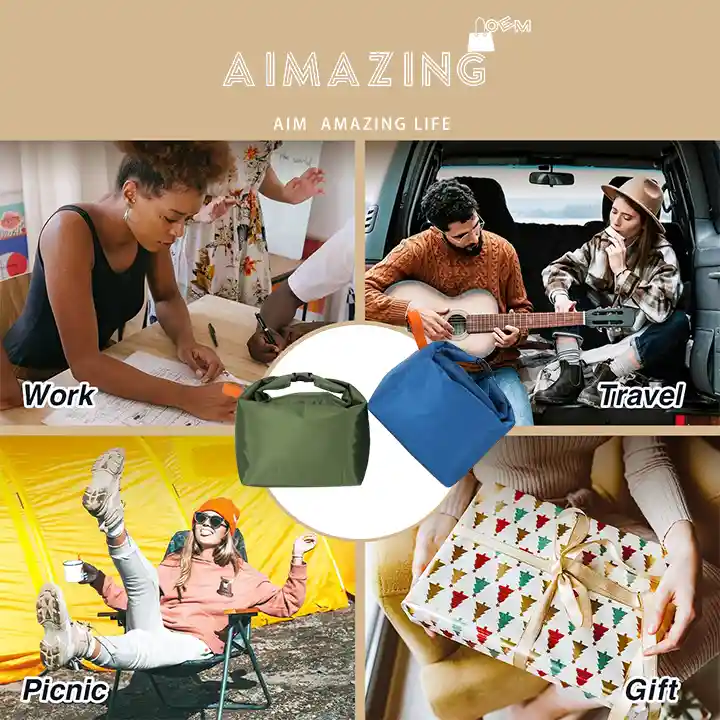
10.1 Durability Standards for High-Activity Users
Lunch bags for teenage guys undergo extreme physical stress.
- Reinforced Bases: Using molded EVA bases prevents wear when bags are dropped on concrete or stored in metal lockers.
- Oversized Zippers: Using #10 nylon coil zippers prevents “teeth-jumping” when the bag is overstuffed.
10.2 The Balanced Day Lunch Bag
We’ve engineered the “Balanced Day” architecture for schools with dual-recess schedules. It features independent thermal compartments to isolate the “first break” from the “second break.” At Aimazing Bag, we ensure each meal remains microbially stable and at its optimal temperature for the entire school day. Dual-zone precision.
Conclusion: Don’t Let Your Brand Fail the Thermal Test
Thermal failure is a calculated risk, not an accident. It’s the result of sub-par R-value foam or compromised seam integrity. At Aimazing Bag, we’ve engineered a high-precision blueprint utilizing heat-welded linings and integrated antimicrobial agents. We provide the technical depth to ensure your product survives the 80% market failure rate. Reliability, by design.